
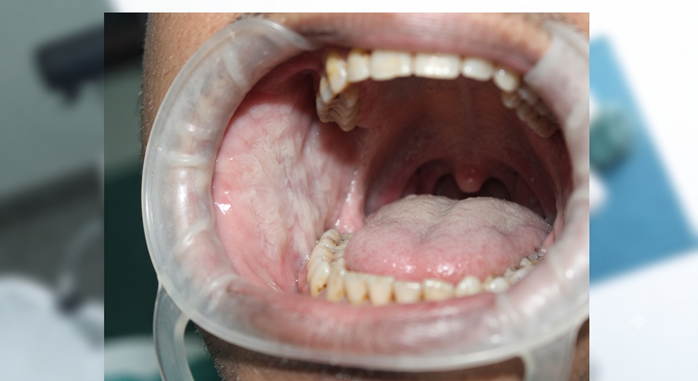
Oral Submucous Fibrosis (OSMF) is a chronic, progressive, and potentially malignant (precancerous) disorder that affects the lining of the mouth. It is characterized by inflammation followed by the gradual formation of fibrous (scar-like) tissue beneath the oral mucosa, leading to stiffness and reduced flexibility of the cheeks, lips, soft palate, and surrounding tissues.
As the disease progresses, the patients start experiencing increasing difficulty in opening the mouth, chewing, swallowing, speaking, and maintaining proper oral hygiene. OSMF is most commonly associated with the habitual chewing of areca nut (supari), either alone or in products such as gutkha, pan masala, and betel quid, with or without tobacco. Other contributing factors include nutritional deficiencies, chronic irritation, and genetic susceptibility.
Common symptoms of Oral Submucous Fibrosis (OSMF)
1) Burning sensation in the mouth, especially while eating spicy foods.
2) Difficulty opening the mouth (reduced mouth opening or trismus).
3) Stiffness of the cheeks and oral tissues.
4) Difficulty chewing, swallowing, or speaking.
5) Dry mouth and reduced salivation.
6) Recurrent mouth ulcers.
7) Blanching (whitish appearance) of the oral mucosa.
8) Thick fibrous bands inside the cheeks that can be felt on examination.
Oral Submucous Fibrosis (OSMF) in Ayurveda
Oral Submucous Fibrosis (OSMF) is a chronic, progressive, potentially malignant disorder of the oral cavity characterized by burning sensation, blanching of the oral mucosa, fibrous bands, and progressive restriction of mouth opening (trismus). As per classical Ayurvedic texts, many Ayurvedic scholars can correlate Oral Submucous Fibrosis (OSMF) with the concept of Khara Paka (खरपाक) because of the characteristic hardening, dryness, and fibrosis of the oral tissues.
From an Ayurvedic perspective, repeated exposure to irritants such as areca nut (supari), tobacco, gutkha, smoking, and excessively spicy or hot foods continuously damages the oral mucosa and leads to aggravation of Pitta Dosha, causing chronic inflammation, burning sensation, and tissue injury. This leads to aggravation of vata, pitta, and kapha dosha. The disease primarily affects the Rasa, Rakta, and Mamsa Dhatus, leading to impaired nourishment, loss of tissue flexibility, and progressive fibrosis.
Oral Submucous Fibrosis (OSMF) Treatment in Ayurveda
Oral Submucous Fibrosis (OSMF) is closely correlated with Kharapaka as per Ayurveda, and is a condition resulting from the aggravation of Vata and Pitta Dosha affecting the oral mucosa. Ayurvedic treatment focuses on eliminating the causative habits, reducing inflammation, improving blood circulation, enhancing tissue nourishment, and preventing further fibrosis through personalized herbal medicines, Panchakarma therapies, Gandusha (medicated oil holding), local applications, Rasayana therapy, and dietary modifications.
1) Kavala Therapy in the Management of Oral Submucous Fibrosis (OSMF): An Ayurvedic Perspective
Kavala involves holding and actively swishing a measured quantity of medicated oil, ghee, decoction, or herbal liquid inside the mouth for a specific duration before expelling it. Kavala is beneficial for strengthening the oral tissues, reducing inflammation, improving salivation, promoting wound healing, and alleviating pain and stiffness.
In patients with OSMF, Kavala using medicated oils helps to lubricate the fibrosed oral mucosa, reduce burning sensation, improve tissue elasticity, and facilitate better mouth opening. Modern research also supports the potential benefits of oil-based oral therapies. Herbal oils possess anti-inflammatory, antioxidant, antimicrobial, and wound-healing properties and it can reduce oxidative stress, improve mucosal hydration, enhance epithelial repair, and maintain oral microbial balance.

Irimedadi Taila Kavala in the Management of Oral Submucous Fibrosis (OSMF)
Irimedadi Taila is a classical Ayurvedic medicated oil widely indicated for diseases of the oral cavity (Mukharoga), gums (Dantaroga), and oral mucosa. Irimedadi Oil contains numerous herbs with anti-inflammatory, wound-healing, antimicrobial, antioxidant, and tissue-regenerating properties, including Irimeda (Acacia farnesiana), Manjistha, Yashtimadhu, Lodhra, Haridra, Daruharidra, Chandana, Jati, and Karpura.
Irimedadi Oil promotes lubrication of the fibrotic tissues, reduces mucosal dryness, alleviates burning sensation, improves tissue elasticity, enhances local blood circulation, and supports healing of inflamed oral mucosa. The lipophilic nature of the medicated oil can also facilitate deeper penetration of phytoconstituents into the oral tissues.
2) Gandhush in the Management of Oral Submucous Fibrosis (OSMF): An Ayurvedic Perspective
Ayurvedic Gandusha Therapy is a traditional oral therapeutic procedure in which the mouth is completely filled with a medicated liquid and retained for a specific duration without movement. Gandusha serves as an important local (Stanik Chikitsa) therapy in the management of OSMF and is aimed at reducing burning sensation, improving lubrication of the oral mucosa, enhancing tissue nourishment, and supporting the healing of fibrotic tissues.
How Gandusha Helps in OSMF
a) It lubricates dry and stiff oral mucosa. It further reduces burning sensation and oral discomfort.
b) It softens fibrotic tissues by continuous local oleation.
c) It enhances local circulation and further supports epithelial healing.
d) It reduces inflammation and further prevents oxidative stress
e) It Maintains oral hygiene and reduces secondary infections.
Trifala Kwatha Gandusha in the Management of Oral Submucous Fibrosis (OSMF)
Triphala Kwatha Gandusha is a traditional Ayurvedic local therapeutic procedure in which a warm decoction (Kwatha) of Triphala is retained in the mouth for a specified duration. In the management of Oral Submucous Fibrosis (OSMF), this therapy is primarily aimed at improving oral hygiene, reducing inflammation, promoting mucosal healing, and alleviating symptoms such as burning sensation, oral discomfort, and restricted mouth opening.
Modern pharmacological studies have demonstrated that Triphala exhibits antioxidant, anti-inflammatory, antimicrobial, and wound-healing activities. The polyphenols, tannins, gallic acid, ellagic acid, and vitamin C present in Triphala helps to reduce the oxidative stress and inflammatory changes. By reducing microbial load and supporting tissue repair, Triphala Kwatha Gandusha can contribute to improved oral comfort and mucosal integrity.

3) Rasanjan Vati in the Management of Oral Submucous Fibrosis (OSMF): An Ayurvedic Perspective
Rasanjan Vati is a classical Ayurvedic formulation traditionally indicated in disorders of the oral cavity and mucous membranes. It helps to reduce inflammation, promote healing of the oral mucosa, alleviate burning sensation, and improve overall oral health.
Rasanjan Vati possesses Kashaya (astringent) and Tikta (bitter) properties, along with Shothahara (anti-inflammatory), Ropana (wound-healing), Lekhana (scraping), and Krimighna (antimicrobial) actions. These properties help cleanse the oral cavity, reduce local inflammation, support healthy granulation, and maintain the integrity of the oral mucosa.
Dr. Ravi Gupta – Best Ayurvedic Doctor for Oral Cancer Treatment in India
If you are looking for the best Ayurvedic doctor for oral cancer treatment in India, Dr. Ravi Gupta, M.D. (Ayurveda), offers comprehensive integrative Ayurvedic care for patients with oral cancer, Oral Submucous Fibrosis (OSMF), leukoplakia, erythroplakia, and other precancerous oral conditions. With more than 15 years of clinical experience and specialized expertise in Ayurvedic oncology, Dr. Gupta develops individualized treatment plans that combine classical Ayurvedic principles with evidence-based supportive care.
Book a Consultation with Dr. Ravi Gupta M.D. (Ayurveda)
Phone: +91 98192 74611 / 99672 39823
Email: cancerinayurveda@gmail.com
Website: www.cancerinayurveda.comConsultation: In-person and online appointments available.