
Colorectal Cancer Treatment in Ayurveda: A Holistic & Natural Healing Approach

Colorectal cancer is a growing health concern worldwide, affecting the colon and rectum, which are vital parts of the digestive system. As awareness increases, many patients are now exploring colorectal cancer treatment in Ayurveda as a holistic and supportive approach to managing the condition. By focusing on root causes, immunity, and overall well-being, Ayurveda offers a natural pathway that complements modern medical care.
What is Colon and Rectum?
The colon and rectum form the final part of the digestive system and play a crucial role in processing waste. The colon, also known as the large intestine, is a long muscular tube approximately five feet in length. Its primary function is to absorb water, electrolytes, and nutrients from digested food while forming stool for elimination.
The colon is divided into four main sections. The ascending colon is located on the right side of the abdomen and moves upward. The transverse colon runs across the upper abdomen from right to left. The descending colon travels downward on the left side, while the sigmoid colon connects the colon to the rectum with its characteristic S-shape.
The rectum is the final portion of the digestive tract, measuring about six inches. It stores stool before elimination and plays a key role in bowel control. Maintaining the health of the colon and rectum is essential, as disorders in these organs can lead to serious conditions like colorectal cancer.
What is Colorectal Cancer?
Colorectal cancer is a type of cancer that begins in the colon or rectum. It is often referred to as colon cancer or rectal cancer depending on its origin, but both share similar characteristics, symptoms, and treatment approaches.
Most colorectal cancers develop from polyps, which are abnormal growths on the inner lining of the colon or rectum. While not all polyps become cancerous, some may gradually transform into malignant tumors over time. Early stages are often asymptomatic, making regular screenings extremely important for early detection.
Common diagnostic methods include colonoscopy, stool-based tests, and biopsy. Detecting cancer in its early stages significantly improves treatment outcomes and survival rates.
Types of Colorectal Cancer
Colorectal cancer can be classified into several types based on cellular origin and behavior. The most common type is adenocarcinoma, which originates from glandular cells and accounts for the majority of cases.
Other less common types include carcinoid tumors, which arise from hormone-producing cells, gastrointestinal stromal tumors (GISTs) that develop in connective tissues, lymphomas originating in lymphatic tissue, and sarcomas that affect muscles or blood vessels.
Each type varies in growth pattern, prognosis, and response to treatment, making accurate diagnosis essential for effective management.
Colorectal Cancer Statistics and Prevalence
Colorectal cancer is one of the most commonly diagnosed cancers worldwide. Its incidence has been steadily increasing, particularly in urban populations due to lifestyle and dietary changes.
In India, the prevalence is rising, especially among individuals over the age of 50. Factors such as sedentary lifestyles, processed food consumption, and reduced fiber intake contribute significantly to this trend.
Globally, colorectal cancer is a leading cause of cancer-related deaths, highlighting the importance of awareness, early screening, and preventive healthcare measures.
Risk Factors of Colorectal Cancer
Several factors increase the risk of developing colorectal cancer. Age is a major factor, with most cases occurring in individuals above 50 years. A family history of colorectal cancer or inherited genetic conditions also raises the risk.
Lifestyle choices play a crucial role. Diets high in red and processed meat, low fiber intake, lack of physical activity, and excessive alcohol consumption contribute significantly. Chronic inflammatory conditions of the colon further increase susceptibility.
Understanding these risk factors enables individuals to adopt preventive strategies and seek timely medical advice.
Symptoms of Colorectal Cancer
Symptoms of colorectal cancer may vary depending on the stage and location of the tumor. Common signs include persistent changes in bowel habits such as diarrhea or constipation, blood in the stool, and abdominal discomfort.
Other symptoms may include unexplained weight loss, fatigue, anemia, and a feeling of incomplete bowel evacuation. These symptoms can also be associated with other conditions, making medical evaluation essential for accurate diagnosis.
Early detection plays a vital role in improving treatment outcomes and overall prognosis.
Treatment of Colorectal Cancer
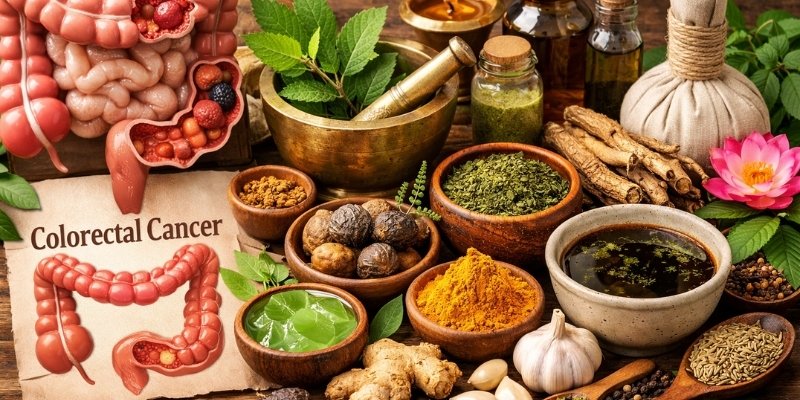
Conventional treatment options for colorectal cancer include surgery, chemotherapy, radiation therapy, targeted therapy, and immunotherapy. The choice of treatment depends on the stage of cancer, overall health of the patient, and specific characteristics of the tumor.
Alongside these treatments, many patients are now exploring complementary approaches such as colorectal cancer treatment in Ayurveda to enhance recovery, manage side effects, and improve quality of life.
About Ayurveda
Ayurveda is an ancient system of medicine that originated in India over 3,000 years ago. It focuses on maintaining balance between the body, mind, and spirit. The principles of Ayurveda are based on three doshas – Vata, Pitta, and Kapha – which govern physiological functions.
Ayurveda emphasizes the importance of digestion (Agni) and the elimination of toxins (Ama). When these elements are balanced, the body remains healthy. Disruptions in this balance can lead to disease.
The approach of ayurvedic treatment for colorectal cancer involves restoring this balance through herbal remedies, dietary changes, detoxification therapies, and lifestyle modifications.
Concept of Colon as Pakvashaya in Ayurveda
In Ayurveda, the colon is referred to as Pakvashaya, which plays a key role in digestion and waste elimination. It is considered the main site of Vata dosha and is responsible for absorbing nutrients and forming stool.
Imbalances in Pakvashaya can lead to symptoms such as pain, bloating, and constipation. Ayurveda identifies these imbalances as contributing factors to disease development, including colorectal disorders.
Concept of Rectum as Guda in Ayurveda
The rectum, known as Guda in Ayurveda, is an essential organ responsible for excretion. It is considered a vital structure and plays a significant role in maintaining bodily balance.
Any dysfunction in Guda can result in disturbances in elimination processes, contributing to various health issues, including colorectal conditions.
Concept of Colorectal Cancer in Ayurveda
Although colorectal cancer is not directly named in classical Ayurvedic texts, it is correlated with conditions like Arbuda, which refers to abnormal growths or tumors.
The development of such conditions is associated with the imbalance of doshas, particularly Vata and Kapha, along with the accumulation of toxins. This understanding forms the basis for natural treatment for colorectal cancer without surgery, focusing on correcting internal imbalances.
Ayurvedic Treatment of Colorectal Cancer
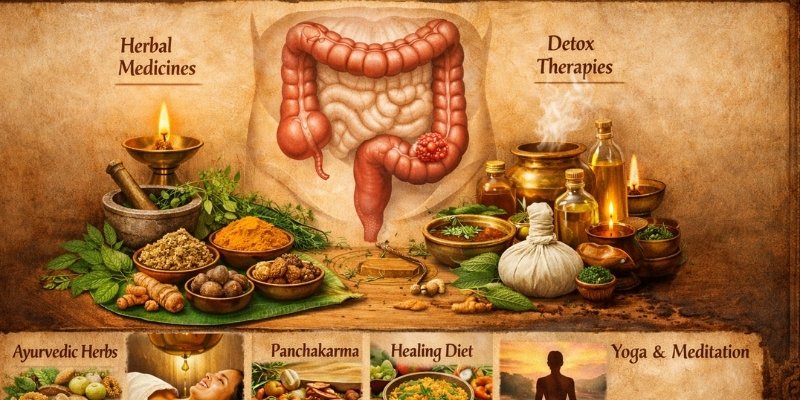
Ayurvedic treatment aims to address the root cause of the disease rather than just symptoms. It includes herbal formulations, detoxification therapies, and dietary management.
Common approaches involve strengthening digestion, enhancing immunity, and reducing inflammation. Various colorectal cancer ayurvedic medicine options are used to support the body’s healing process.
India is known for its authentic Ayurvedic care, and patients seeking colon cancer ayurvedic treatment India benefit from experienced practitioners and traditional therapies. Choosing the best ayurvedic doctor for colorectal cancer ensures personalized care and effective treatment planning.
Start Your Journey Toward Better Health
Colorectal cancer is a serious condition that requires timely diagnosis and comprehensive care. While conventional treatments remain essential, integrating Ayurveda offers a holistic path to healing. By focusing on root causes, improving immunity, and restoring balance, colorectal cancer treatment in Ayurveda provides supportive care that enhances overall well-being.
CancerInAyurveda is dedicated to offering personalized and effective Ayurvedic solutions for patients seeking natural healing. With expert guidance and a patient-centered approach, CancerInAyurveda continues to support individuals on their journey toward better health and improved quality of life.
FAQ
1. Can Ayurveda cure colorectal cancer completely?
Ayurveda focuses on holistic healing and improving the body’s natural defense system. While it may not replace conventional treatments entirely, colorectal cancer treatment in Ayurveda can support recovery, reduce symptoms, and enhance quality of life when combined with proper medical guidance and personalized care.
2. Is Ayurvedic treatment safe for colorectal cancer patients?
Yes, Ayurvedic treatments are generally safe when prescribed by qualified practitioners. They use natural herbs and therapies tailored to individual needs. The goal is to minimize side effects, improve immunity, and support overall health without causing additional stress on the body.
3. What is the duration of Ayurvedic treatment for colorectal cancer?
The duration varies depending on the stage of cancer, patient health, and treatment goals. Ayurvedic treatment for colorectal cancer is usually a long-term process focusing on gradual healing, detoxification, and strengthening the body, rather than providing instant results like conventional treatments.
4. Can Ayurveda be combined with chemotherapy or radiation?
Yes, Ayurveda can complement modern treatments like chemotherapy and radiation. It helps reduce side effects, improve digestion, and boost immunity. However, it is important to consult both your oncologist and Ayurvedic doctor to ensure a safe and coordinated treatment plan.
5. How effective is natural treatment for colorectal cancer without surgery?
A natural treatment for colorectal cancer without surgery focuses on improving immunity, reducing inflammation, and slowing disease progression. While results vary, many patients experience better symptom management and enhanced well-being when following a personalized Ayurvedic treatment plan under expert supervision.