
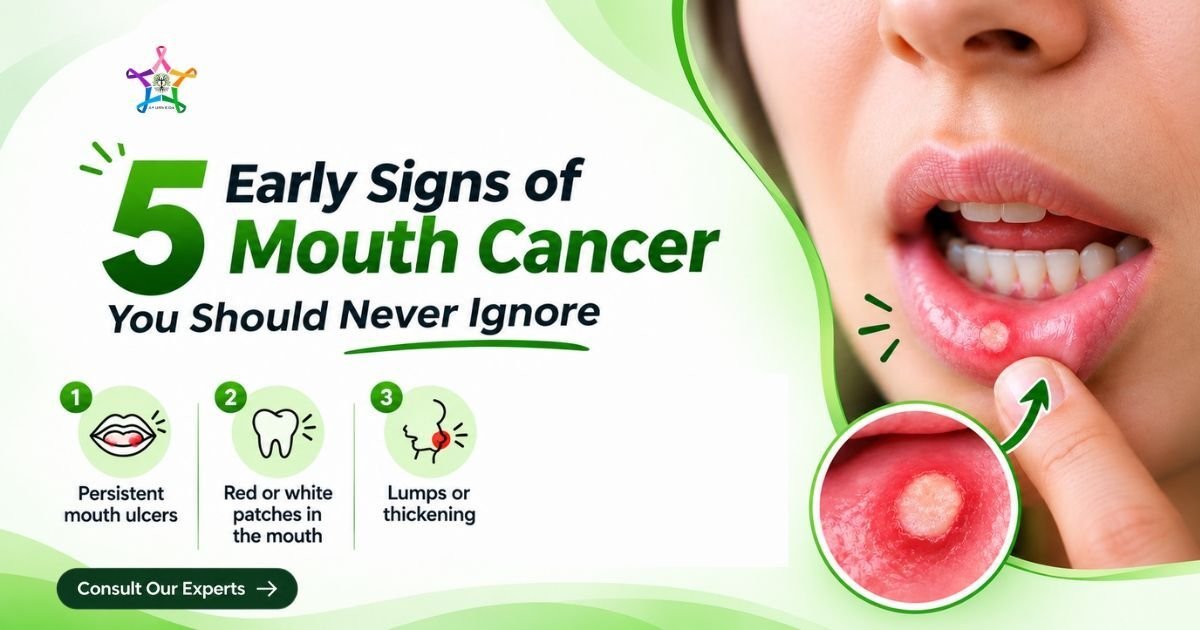
Most mouth ulcers vanish within a week or two. Others linger quietly for weeks before anyone takes notice.
That delay matters. Oral cancer is far easier to treat when caught early, yet many Indians see a doctor only at an advanced stage.
Here are the five early signs to watch for, and how Ayurvedic treatment for oral cancer can support medical care.
Early Oral Cancer Symptoms and Where Ayurvedic Care Fits In
The five early oral cancer symptoms are a mouth ulcer lasting beyond three weeks, red or white patches, a lump or thickening, lasting pain or trouble swallowing, and a hoarse voice. See a dentist or doctor quickly. Ayurvedic treatment for oral cancer can then support, not replace, medical care.
Why Early Detection of Mouth Cancer Matters in India?
India carries one of the world’s heaviest oral cancer burdens. A GLOBOCAN 2022 analysis published in ecancermedicalscience reported 143,759 new cases and 79,979 deaths in India that year.
It also found that more than half of cases are diagnosed at stage III or IV. It linked around 70-80% of cases to tobacco and areca nut use.
Early detection gives doctors more options and a better chance of success.
The 5 Warning Signs of Mouth Cancer, Explained
These oral cancer symptoms often feel minor at first. Many are painless early on, so people ignore them.
1. A Mouth Ulcer That Won’t Heal
Ordinary ulcers usually heal within two weeks. The NHS advises getting any ulcer lasting more than three weeks checked by a dentist or doctor.
2. Red or White Patches
A white patch (leukoplakia) or a red patch (erythroplakia) on the gums, tongue or inner cheek needs attention. Red patches carry a higher risk.
3. A Lump or Thickening
Feel for any lump on the lip, inside the cheek or in the neck. A new rough or thickened area also needs a dentist’s opinion.
4. Persistent Pain or Trouble Swallowing
Lasting mouth pain, or difficulty chewing and swallowing, can signal a deeper problem. Loose teeth with no clear dental cause also deserve a check.
5. A Hoarse Voice or Changes in Speech
A lasting hoarse voice or harder speech can point to a growth on the tongue or throat. Unexplained weight loss adds to the concern.
Who Faces a Higher Risk of Oral Cancer
Key risk factors include:
- Chewing tobacco, gutkha, khaini or paan with tobacco
- Smoking bidis or cigarettes
- Regular areca nut (supari) use
- Heavy drinking, especially with tobacco
If any apply to you, book regular dental check-ups.
How Ayurveda for Mouth Cancer Supports Conventional Treatment?
Surgery, radiotherapy and chemotherapy remain the standard treatments for oral cancer. Ayurveda does not replace them.
Instead, Ayurveda for mouth cancer focuses on supportive care. Under qualified supervision, it aims to support comfort, appetite and wellbeing during and after treatment.
Always tell your oncologist about any herbal medicine, as some herbs can interact with cancer drugs. Ayurvedic treatment for oral cancer works best within one coordinated plan.
Patients seeking Ayurvedic treatment in Maharashtra for mouth cancer should choose a team that works with their oncologist.
Listen Closely: Your Mouth Often Warns You First
A lingering sore or an odd patch is easy to brush aside. Yet these small changes are often the earliest clues, and acting fast matters.
Book a check-up if any sign lasts beyond three weeks. If you’re looking for the best consultation? Cancer In Ayurveda in Mumbai, led by Dr Ravi Gupta, M.D. (Ayurveda), offers integrative care that works alongside your oncology team.
Pair early detection with medical care, and let Ayurvedic treatment for oral cancer play its supportive role.
Frequently Asked Questions
1. What does an early oral cancer patch look like?
It may appear as a white or red patch on the gums, tongue or inner cheek. Red patches are generally more concerning. Neither should ever be ignored, especially if it lasts more than three weeks or feels rough or thickened.
2. Is oral cancer painful in the early stages?
Often, no. Many early oral cancer symptoms, such as patches or small ulcers, cause little or no pain. That is why people often delay seeking help. Any mouth change lasting over three weeks deserves a professional check, painful or not.
3. Can Ayurveda cure oral cancer?
No credible evidence shows Ayurveda can cure oral cancer on its own. Ayurveda for mouth cancer is best used purely as supportive care alongside surgery, radiotherapy or chemotherapy, under the guidance of both your oncologist and a qualified Ayurvedic doctor.
4. Is it safe to take Ayurvedic medicine during chemotherapy?
It can be, but only with your doctor’s approval. Some herbs may interact with cancer drugs. Safe Ayurvedic treatment for oral cancer means your Ayurvedic doctor and oncologist share information openly and agree on each remedy before you take it.
5. Who is most at risk of oral cancer in India?
People who chew tobacco, gutkha, khaini or paan with tobacco face the highest risk. Smoking, regular areca nut use and heavy drinking also raise it. Regular dental check-ups help catch early changes, especially for long-term tobacco or areca nut users.