
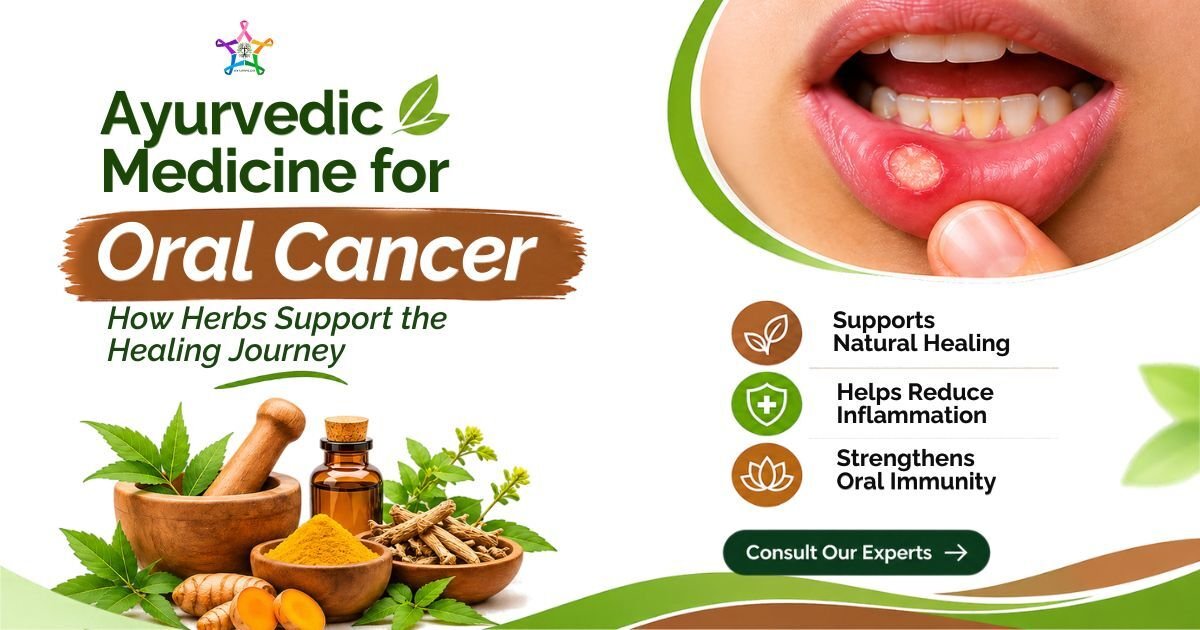
A mouth cancer diagnosis changes the simplest things. Eating hurts. Talking feels like effort, and even a sip of water can sting. So it’s natural for families in Maharashtra to ask where Ayurvedic Medicine for Oral Cancer fits, and whether it’s safe alongside hospital treatment.
It is, when it’s planned properly. Ayurveda doesn’t replace surgery, radiotherapy or chemotherapy. It works around them, helping the body cope with the strain they bring.
Why Mouth Cancer Hits So Close to Home in Maharashtra
India has the highest oral cancer incidence in the world. A GLOBOCAN 2022 analysis published in ecancermedicalscience links roughly 70 to 80 per cent of cases to tobacco and areca nut use. In Maharashtra, that habit takes many local forms, from gutkha and mawa to kharra, which is widely chewed across Vidarbha.
That is why interest in Ayurvedic Medicine for Oral Cancer keeps growing here. Patients want relief from side effects and more strength to finish treatment. They aren’t looking for miracle promises.
Still, one belief holds many people back. They assume Ayurvedic treatment for mouth cancer means walking away from their oncologist. It doesn’t, and it shouldn’t. A good Ayurvedic doctor plans around the chemotherapy and radiation schedule, not against it.
What Ayurvedic Medicine for Oral Cancer Really Does?
Ayurveda treats the person as well as the disease. Classical texts describe abnormal growths under the term arbuda, and care focuses on digestion, immunity and tissue strength. In practice, Ayurvedic treatment for oral cancer has three clear goals:
- Easing treatment side effects such as mouth ulcers, dryness and nausea
- Supporting appetite and nutrition when chewing becomes painful
- Rebuilding energy and stamina during and after recovery
The Herbs Doing the Quiet Work
Each herb is chosen for a reason, not added to a long list for show.
- Haridra (turmeric): Its main compound, curcumin, has been studied as an add-on therapy. A 2023 review in the World Journal of Methodology found it acts on several pathways linked to oral cancer growth, but noted that plain curcumin is poorly absorbed by the body.
- Yashtimadhu (liquorice): Used in gargles to soothe sore, ulcerated tissue.
- Guduchi: Traditionally given to support immunity through long treatment cycles.
- Ashwagandha: Helps with fatigue, weight loss and broken sleep.
- Triphala: A common mouth rinse for oral hygiene.
This is where proper oral cancer Ayurveda care differs from buying herbs online. Dose, timing and combinations all matter. Some herbs interact with chemotherapy drugs or affect blood clotting before surgery, so every formula must be checked against your current medicines.
Small Daily Habits, Big Difference
Herbs only do part of the job. Soft, warm foods like moong dal soup, khichdi and thin rice gruel are easier to swallow and gentle on a sore mouth. Regular gargling keeps the mouth clean. And stopping every form of tobacco, completely, is non-negotiable.
Ayurveda for mouth cancer gives these routines as much weight as any herb. They’re simple, but done daily, they shape how well you get through treatment.
Your Next Step Towards a Gentler Recovery
Ayurvedic Medicine for Oral Cancer works best as a companion to oncology care, chosen with care and reviewed often. At Cancer In Ayurveda, Dr. Ravi Gupta builds each plan around the patient’s diagnosis, treatment stage and daily symptoms.
If you or someone close to you in Maharashtra is facing mouth cancer, book a consultation and bring your latest reports. You’ll get an honest view of what Ayurveda can and can’t do for you.
FAQs
1. Can Ayurveda cure oral cancer?
No. Ayurveda isn’t a replacement for surgery, radiotherapy or chemotherapy. Ayurvedic Medicine for Oral Cancer works as supportive care, helping with side effects, appetite, energy and recovery. It should always run alongside your oncologist’s treatment, never instead of it.
2. Is it safe to take Ayurvedic herbs during chemotherapy?
It can be, but only under supervision. Some herbs interact with chemotherapy drugs or affect blood clotting. Your Ayurvedic doctor should know every medicine you take, and your oncologist should know about every herb you start. Please don’t self-prescribe herbs.
3. Which herbs help with mouth ulcers during radiotherapy?
Yashtimadhu (liquorice) and Triphala are commonly used as gargles to soothe sore tissue and keep the mouth clean. Turmeric is also used in some preparations. The right choice depends on how severe the ulcers are and where you are in treatment.
4. When should I start Ayurvedic support after diagnosis?
Ideally, as soon as your oncologist confirms the treatment plan. Starting early lets your Ayurvedic doctor prepare your body for the treatment ahead, time herbs around chemotherapy or surgery dates, and manage side effects before they become hard to control.
5. What should I bring to my first consultation?
Bring your biopsy report, scan results, recent blood tests, current prescriptions and your treatment schedule. A list of symptoms, such as pain, weight loss or difficulty swallowing, helps Dr. Ravi Gupta build a safe plan that suits your current stage.