
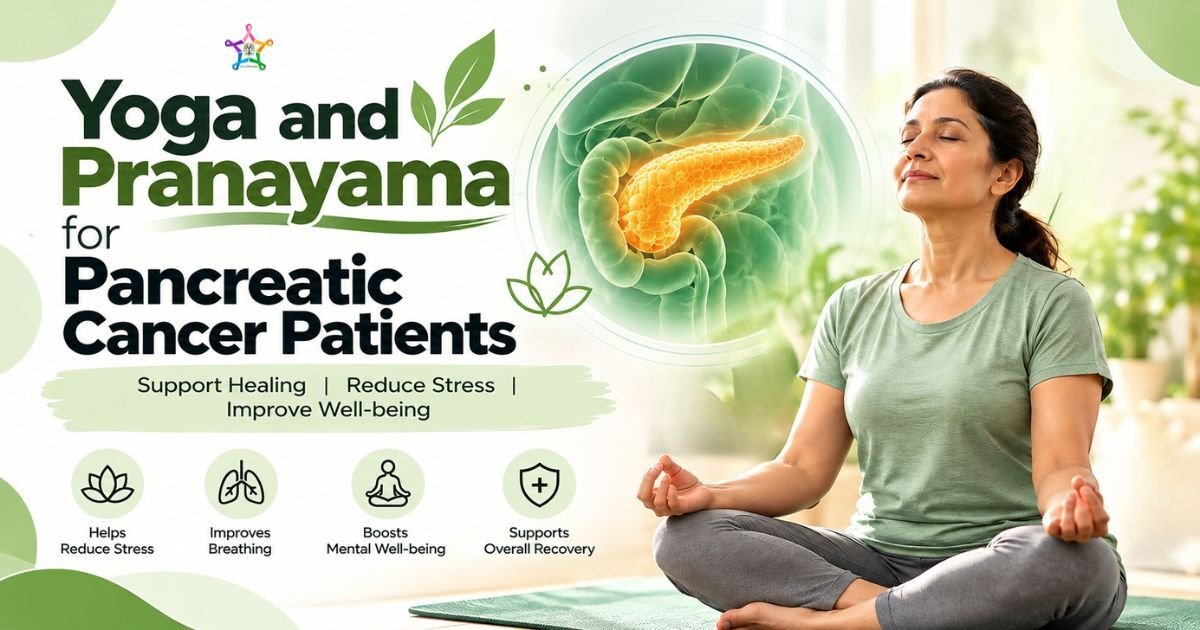
Ask anyone caring for a parent with pancreatic cancer what the hardest part is, and they rarely mention scans first. They talk about the exhaustion, the meals left half eaten, the nights nobody sleeps.
That’s often when families start asking about Ayurvedic Treatment for Pancreatic Cancer. In our experience, yoga and breathwork are usually the easiest place to begin.
Here’s what they can do, which practices are safe, and when to stop.
Can Yoga and Breathwork Help in Ayurvedic Treatment for Pancreatic Cancer?
They can help, but only as supportive care. Gentle yoga and slow breathing may reduce anxiety, low mood and tiredness. As part of Ayurvedic Treatment for Pancreatic Cancer, they won’t shrink a tumour, so keep them alongside your oncologist’s plan.
Why Mind-Body Care Matters in Pancreatic Cancer Treatment?
The numbers here are sobering. The American Cancer Society’s 2026 report puts five-year relative survival for pancreatic cancer in the US at just 13%.
Surgery, chemo and radiotherapy remain the core of pancreatic cancer treatment, but patients also need ways to cope with how that treatment feels.
In 2023, the Society for Integrative Oncology and ASCO issued a joint guideline that recommends yoga for anxiety and depression in adults with cancer.
One honest caveat, though. Most of those studies were done with breast cancer patients, and pancreatic cancer research is still thin.
Gentle Yoga Poses for Pancreatic Cancer Patients
For most patients, 10 to 15 minutes of slow, easy movement is plenty.
- Tadasana (Mountain Pose): stand with your back near a wall in case you wobble.
- Chair Cat-Cow: sit, then gently round and arch your spine.
- Supported Balasana (Child’s Pose): a pillow under the chest helps. Leave it out if your stomach feels squashed.
- Shavasana with a bolster: lie back, knees supported, and just rest.
Please steer clear of deep twists, backbends and upside-down poses. This matters most after abdominal surgery or if you have a stent.
Pranayama Practices That Support Calm and Energy
On bad days, breathing practice still works lying down.
Within Ayurveda for pancreatic cancer, slow breathing helps calm Vata, the dosha linked with worry and restlessness.
- Belly breathing: five minutes, hand resting on your tummy.
- Anulom Vilom: alternate nostril breathing, easy to pick up.
- Bhramari: a soft humming sound on the out-breath. Many find it settles them before bed.
Kapalbhati and Bhastrika involve sharp, forceful exhales, so give those a miss. Holding your breath isn’t a good idea either.
How Yoga Fits With Ayurvedic Medicine?
Breathwork usually works best alongside diet changes, proper rest and, if a qualified doctor thinks it’s right, Ayurvedic medicine for pancreatic cancer.
Here’s the catch. Certain herbs found in Ayurvedic medicine for pancreatic cancer may interfere with chemotherapy, so tell your oncologist about everything you take.
Good Ayurveda for pancreatic cancer depends on both doctors talking to each other.
Safety Checklist Before You Start
- Clear it with your oncologist first.
- If you can, learn from a trained yoga therapist.
- Stop at once if you feel pain, dizziness or short of breath.
- Skip practice when blood counts are low or you’re running a fever.
Small Breaths, Steady Strength: Moving Forward With Care
Nobody should promise that yoga will cure pancreatic cancer. What it can do is make some days a bit easier to get through.
Choose Ayurvedic Treatment for Pancreatic Cancer that respects your oncology team’s plan.
At Cancer In Ayurveda, Dr Ravi Gupta and his team build personalised Ayurvedic Treatment for Pancreatic Cancer, covering diet and yoga, around your existing pancreatic cancer treatment. Get in touch to book a consultation.
Frequently Asked Questions
1. Is yoga safe for pancreatic cancer patients?
For many people, yes, as long as their oncologist agrees. Stick to chair-based or lying-down poses and keep sessions short. Avoid twists, inversions and anything pressing on the stomach, particularly after surgery. If something hurts, stop and rest right away.
2. Which pranayama is best during chemotherapy?
Slow techniques usually suit chemo days best. Belly breathing, Anulom Vilom and Bhramari can help you settle and relax. Practitioners of Ayurveda for pancreatic cancer tend to avoid Kapalbhati during recovery, as its forceful exhales put strain on the abdomen.
3. Can Ayurvedic medicine cure pancreatic cancer?
There’s no reliable clinical evidence that it can. Ayurvedic medicine for pancreatic cancer is used for comfort, digestion and general emotional wellbeing. It should never replace surgery or chemotherapy, and your oncologist needs to know about every remedy you take.
4. How often should patients practise yoga?
A little practice each day beats one long session a week. Ten to fifteen minutes is a sensible start. When energy is very low, breathing exercises alone are fine. Build up slowly, ideally with help from a trained yoga therapist.
5. Can yoga help with treatment side effects?
It might, yes. Alongside pancreatic cancer treatment, yoga may ease anxiety, low mood and poor sleep. The research backing this comes mostly from other cancers, so pancreatic-specific evidence is limited. Treat it as support, not as treatment for the tumour.