
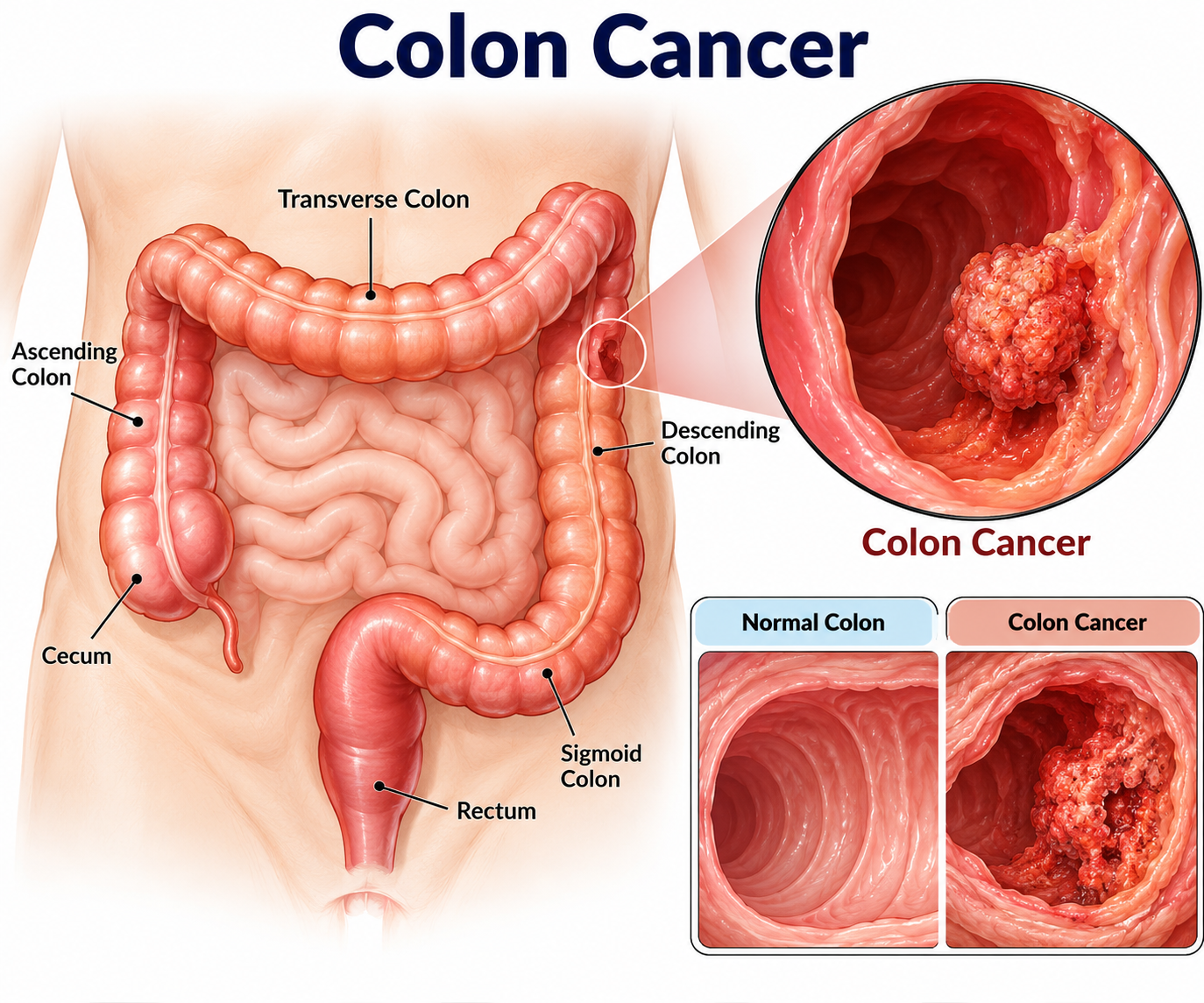
Colon cancer is a type of cancer that develops in the colon, which is the main part of the large intestine. It usually begins in the inner lining of the colon and often develops from precancerous growths called polyps. Common symptoms include blood in the stool, persistent changes in bowel habits, abdominal pain, unexplained weight loss, fatigue and iron-deficiency anaemia. Risk factors include increasing age, family history of colorectal cancer, obesity, physical inactivity, smoking, alcohol consumption and diets high in processed meat. Colon cancer is diagnosed through investigations such as colonoscopy, biopsy and imaging.
According to GLOBOCAN 2022 estimates, India recorded approximately 34,046 new colon cancer cases and 20,629 deaths from colon cancer. When colon and rectal cancers are considered together as colorectal cancer, the estimated burden was 64,863 new cases and 38,367 deaths. A healthy lifestyle, regular physical activity, maintaining a healthy weight and appropriate screening for people at increased risk may help reduce risk.
What are early symptoms of Colon Cancer?
Because colon cancer often develops without any warning signs in its earliest stages, proactive screening is an essential component of prevention. The majority of polyps and tumors in their early stages are completely asymptomatic, developing on the inner lining of the large intestine without causing any pain or discomfort. But when early symptoms do appear, they’re often subtle, easily dismissed as minor, temporary gastrointestinal complaints. If these changes are seen early, the diagnosis can be made early and the treatment is often very successful.
A) Changes in Bowel Habits
One of the most common early symptoms is a consistent change in your normal bathroom routine. This isn’t a single day of upset stomach, but rather changes that last longer than a few days to a week.
1) Altered consistency: Having unusual diarrhea or constipation or alternating between the two without a clear dietary cause.
2) Changes in stool shape: If the stool you pass is consistently thinner than normal, often described as pencil-thin or ribbon-like, it may be because a growing tumor is partially blocking the passageway of the colon or rectum, forcing the stool to squeeze past it.
3) Incomplete evacuation: A constant, uncomfortable feeling that you have to pass a stool, even if you just did. In medicine a symptom called tenesmus is frequently caused by a mass irritating the lower alimentary canal or rectum.
B) Bleeding and stool colour changes
Blood in the GI tract is a red flag. However, the appearance of the blood can vary greatly depending on where the bleed is located in the colon.
1) Bright red blood: Bright red blood on the toilet tissue, in the bowl or physically covering the stool should always be assessed by a physician, although it is most commonly due to benign causes such as haemorrhoids or small anal fissures.
2) Dark or tarry stools: When a tumor bleeds high up on the right side of the colon, the blood is digested as it moves through the intestinal tract. By the time it passes, the stool might look very dark brown, black or tar like.
C) Abdominal Pain and Discomfort
Complains of mild but persistent abdominal discomfort is another potential warning sign, often manifesting as frequent gas pains, bloating, fullness, or cramps that do not resolve with dietary adjustments or over-the-counter medications and further persist for more than 6 weeks. While occasional gas is a normal part of digestion, a localized, persistent ache or cramping that seems new and out of character warrants attention.
1) Systemic (Whole-Body) Symptoms: Sometimes, the first noticeable signs of colon cancer do not seem related to digestion at all.
2) Unexplained fatigue and weakness: Tumors on the right side of the colon often bleed microscopically. This chronic blood loss might not be visible in the stool but steadily depletes red blood cells, leading to iron-deficiency anemia. This manifests as deep, unexplained exhaustion, shortness of breath, dizziness, or pale skin.
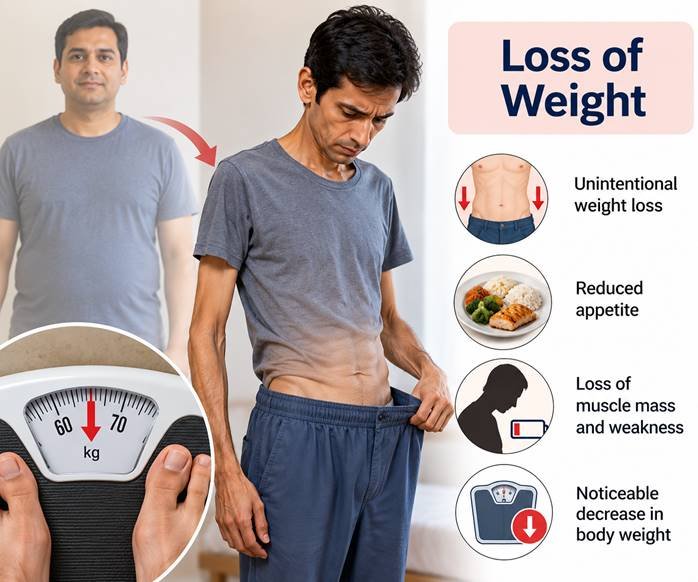
3) Unintended weight loss: Dropping weight without altering your diet or exercise routine is a systemic sign that the body is under stress, fighting an illness, or that a tumor is altering your metabolism and nutrient absorption. Loss of more than 10% of body weight should be concerning.
Dr. Ravi Gupta – Senior Ayurveda and Panchakarma Consultant | Specialised in Ayurvedic Cancer Management and Treatment
Dr. Ravi Gupta, M.D. (Ayurveda) is a Senior Ayurveda and Panchakarma Consultant specialising in Ayurvedic Oncology, Cancer Management and Treatment. With 12+ years of oncology experience, he focuses on developing personalised Ayurvedic treatment approaches for patients with different types of cancer, including breast, lung, colorectal, stomach, head and neck cancers, lymphoma and leukaemia.
His clinical approach integrates classical Ayurvedic principles with an understanding of modern cancer diagnosis and treatment. His areas of expertise include Panchakarma, Rasayana Chikitsa, Ayurvedic herbal formulations, dietary management and lifestyle counselling.
Contact & Consultation
Phone / WhatsApp: +91-98192 74611
Email: cancerinayurveda@gmail.com
Website: www.cancerinayurveda.com