

Breast cancer is the most commonly diagnosed cancer among women in the United States and remains one of the leading causes of cancer-related deaths. It develops when cells in the breast tissue acquires certain harmful genetic mutations and further grow uncontrollably forming a malignant tumor. According to the American Cancer Society, breast cancer accounts for nearly 30% of all newly diagnosed cancers in U.S. women. In 2026, an estimated 321,910 new cases of invasive breast cancer and approximately 60,730 cases of non-invasive breast cancer (ductal carcinoma in situ) are expected to be diagnosed in women across the United States.
If detected early, the five-year survival rate for localized breast cancer is about 99%, highlighting the importance of routine screening and education. Nevertheless, breast cancer incidence is still increasing in some age groups, especially in women younger than 50 years. Growing incidence of early-onset breast cancer has been reported in numerous states in the U.S., underscoring the importance of prevention and early diagnosis.
Dr. Ravi Gupta, Ayurveda Cancer Consultant, provides integrative Ayurvedic support for breast cancer patients through individualized treatment protocols aimed at enhancing quality of life and holistic patient care.
Dr. Ravi Gupta: Leading Integrative Ayurveda Cancer Consultant for Breast Cancer Patients in the USA
Dr. Ravi Gupta is well recognized for his integrative approach to cancer care, combining the principles of classical Ayurveda with modern medical understanding to treat patients diagnosed with breast cancer. Through personalized treatment protocols, he focuses on providing holistic treatment throughout the cancer journey, enhancing strength and immunity, managing treatment-related side effects.
As an experienced Ayurveda Cancer Consultant, Dr. Ravi Gupta develops individualized treatment plans includes:
- Ayurvedic herbal formulations
- Rasayana (rejuvenative) therapies
- Dietary guidance
- Panchakarma-based approaches.
The primary goal is to support the body’s natural healing mechanisms, improve resilience, and help patients maintain a better quality of life while continuing their oncological care.
A) Ayurvedic Herbal Medicines and Rasayana Therapy for Breast Cancer
Several Ayurvedic herbs have traditionally been utilized for their Rasayana (rejuvenative), immunomodulatory, antioxidant, and supportive properties. These herbs are:
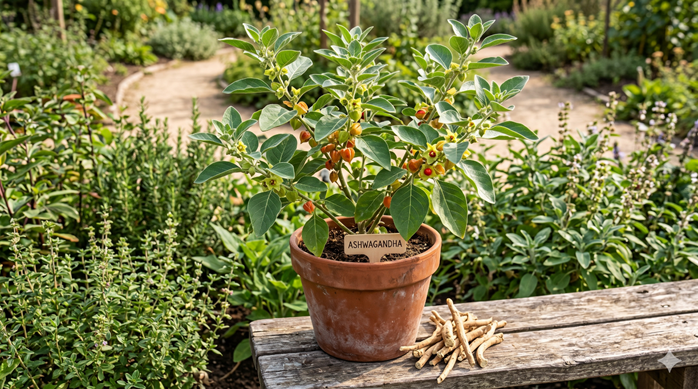
1) Ashwagandha (Withania somnifera) in the Management of Breast Cancer
Ashwagandha (Withania somnifera) which is also known as Indian Ginseng or Winter Cherry, is one of the most beneficial in medicinal herbs in Ayurveda. It is classified as a Rasayana herb, it is traditionally used to promote longevity, vitality, strength, immunity, and overall health.
According to Ayurvedic principles, breast cancer is associated with imbalances of Doshas and disturbances in body tissues such as Rakta, Mamsa, and Meda Dhatus. Ashwagandha helps restore balance through its rejuvenating, nourishing, and adaptogenic properties. Benefits of Ashwagandha in Breast Cancer as follows:
a) Angiogenesis & Microenvironment Modulation
Withaferin A downregulates pro-angiogenic factors, including Vascular Endothelial Growth Factor (VEGF), limiting the neovascularization required for solid tumor expansion. It modulates key developmental and stemness pathways such as Notch-1, STAT3, and FOXO3A, which are heavily implicated in treatment resistance and the maintenance of breast cancer stem cell populations.
b) Induction of Programmed Cell Death (Apoptosis)
Modern research has shown that Withaferin A triggers apoptosis through both intrinsic (mitochondrial) and extrinsic pathways. It also suppresses survival signaling networks by inhibiting the phosphorylation of Akt (at Ser473) and downregulating the NF-κB p65 subunit, preventing its nuclear translocation.
c) Molecular Mechanisms in Mammary Carcinoma
Pre-clinical in vitro and in vivo models demonstrate that Ashwagandha targets multiple hallmarks of breast cancer progression, showing efficacy across various receptor subtypes, including Estrogen Receptor/Progesterone Receptor positive (ER/PR+) and Triple-Negative Breast Cancer (TNBC).
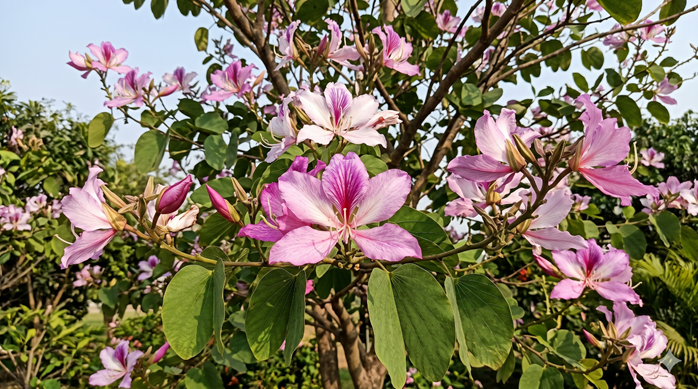
2) Kanchanar (Bauhinia variegata) in the Management of Breast Cancer
Kanchanar (Bauhinia variegata Linn.) is a well-known medicinal tree in Ayurveda, traditionally used in the management of Granthi (benign glandular swellings), Arbuda (tumors), Apachi (lymphadenopathy), and Kapha-related disorders. Due to its Kapha-Vata pacifying, Lekhana (scraping), Shothahara (anti-inflammatory), and Granthihara (mass-reducing) properties, Kanchanar is widely incorporated into Ayurvedic protocols for breast disorders, including supportive management of breast cancer. Benefits of Kanchanara in Breast Cancer as follows:
1) Induction of Apoptosis:
Phytochemical fractions—specifically flavonoids (quercetin, rutin) and tannins—upregulate pro-apoptotic proteins (Bax) and downregulate anti-apoptotic proteins (Bcl-2), triggering programmed cell death in malignant breast cells.
2) Anti-Angiogenesis:
Aqueous and ethanolic bark extracts demonstrate an ability to suppress Vascular Endothelial Growth Factor (VEGF). By inhibiting new blood vessel formation, it starves the expanding tumor mass of oxygen and vital nutrients.
3) Immune Modulation:
Kanchanar exhibits a prominent stabilizing effect on helper T-cells and enhances macrophage activity, augmenting the host’s natural immunosurveillance against abnormal cells.
4) Modern Phytochemical & Translational Mechanisms:
Research into Bauhinia variegata extracts highlights several mechanisms that target standard hallmarks of breast cancer, particularly in human breast adenocarcinoma cell lines (like MCF-7 and MDA-MB-231).
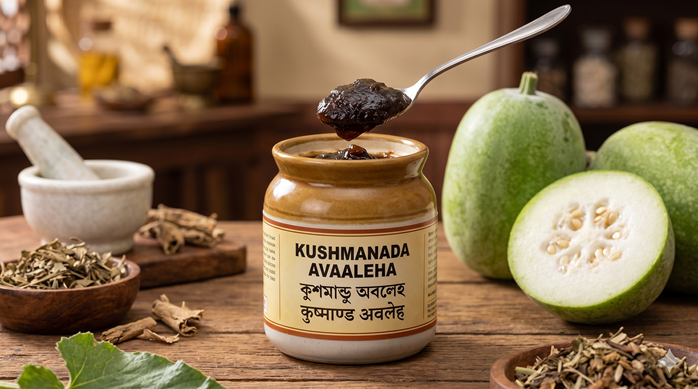
C) Kushmanda Avaleha in the Management of Breast Cancer
Kushmanda Avaleha is a traditional Ayurvedic formulation prepared primarily from Kushmanda (Benincasa hispida Linn.) and is also commonly known as ash gourd or winter melon. It is described in Ayurvedic texts as a Balya (strength-promoting), Brimhana (nourishing), Rasayana (rejuvenative), Vrishya (vitality-enhancing), and Pittashamaka (Pitta-pacifying) preparation.
Kushmanda is regarded as an excellent Rasayana and can help to improve tissue regeneration and overall well-being. It can also support recovery from the physical and emotional stress associated with breast cancer and its treatment. Benefits of Kushmanda Avaleha in Breast Cancer as follows:
a) Nutritional Support and Weight Maintenance
Many breast cancer patients experience appetite loss, cachexia, and unintended weight loss. Kushmanda Avaleha provides nourishment and further help to improve body weight, strength, and endurance in debilitated individuals.
b) Immunomodulatory Potential
Recent clinical evaluations indicate that a sustained course of Kushmanda Avaleha significantly elevates serum IgG levels and enhances Total Antioxidant Capacity (TAC), optimizing the host immune response during periods of myelosuppression (bone marrow suppression).
c) Antioxidant Activity
Kushmanda contains various bioactive compounds with antioxidant properties. Antioxidants can help to reduce oxidative stress, which is known to contribute to cellular damage and treatment-related adverse effects.
Dr. Ravi Gupta: Integrative Breast Cancer Treatment Support for Patients in the USA
For patients in the United States seeking a comprehensive and integrative approach to breast cancer care, Dr. Ravi Gupta, Ayurveda Cancer Consultant, provides personalized Ayurvedic support alongside conventional cancer treatments. International patients can conveniently access consultations online, ensuring expert guidance regardless of their location in the USA.
To schedule a consultation, contact Dr. Ravi Gupta, Ayurveda Cancer Consultant at
+91-9819274611
cancerinayurveda@gmail.com.
For more information about integrative breast cancer care, visit Cancer In Ayurveda.