
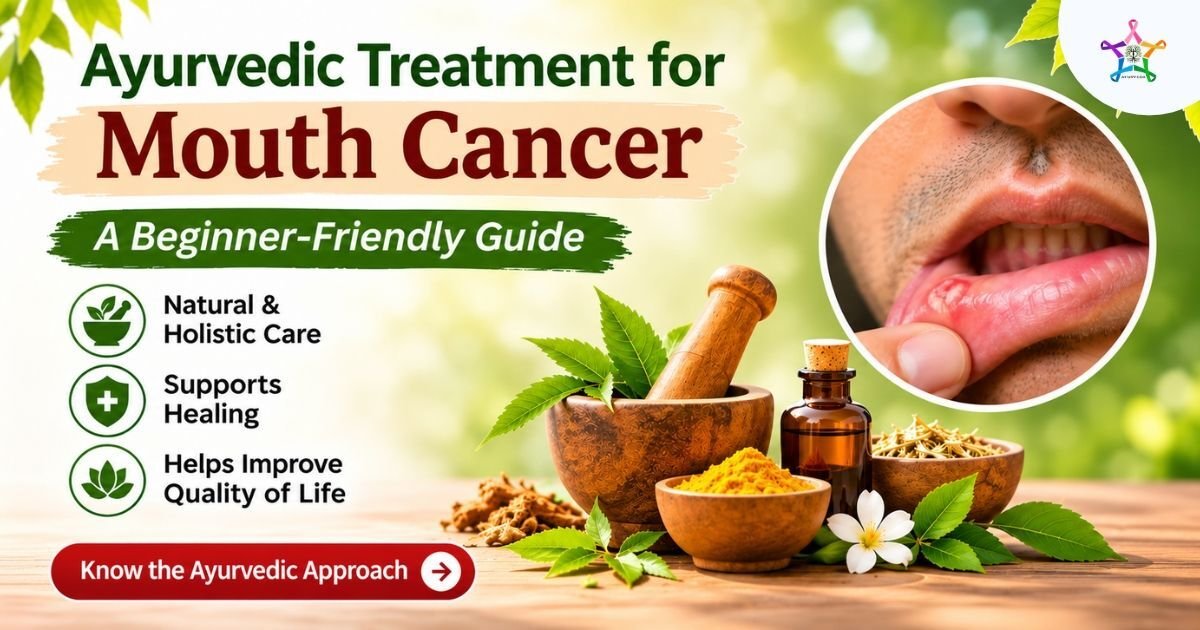
A mouth ulcer that refuses to heal is easy to ignore. Many people in Gujarat put it down to a sharp tooth or a spicy meal and wait. If you are reading about Ayurvedic treatment for mouth cancer, you are worried about yourself or someone close. This guide explains what Ayurveda can offer, what it cannot, and how to begin sensibly.
Spot the Warning Signs Before They Spread
Mouth cancer rarely announces itself with pain. The early signs are quiet: a non-healing ulcer, a white or red patch, a lump, or unexplained bleeding. Sudden tooth loosening and difficulty opening the mouth also deserve attention. Gutka, mawa, paan masala and tobacco in any form raise the risk sharply, and these habits are common across Gujarat.
Late diagnosis is the real problem. According to a 2026 report in Indian Pharma Post, nearly 70 to 80 per cent of oral cancer cases in India are found at an advanced stage, while early detection offers survival rates above 80 per cent. So any sore that lasts beyond two to three weeks needs a doctor’s examination and, if advised, a biopsy. Anyone who chews tobacco should also ask a dentist for a routine mouth check.
Where Ayurvedic Treatment for Mouth Cancer Fits In?
Here is the honest answer. Ayurveda is supportive care. It does not replace surgery, radiotherapy or chemotherapy, and no one should delay a biopsy to try herbs first. What it can do is work beside conventional treatment. Diet planning, herbal support, oral care routines and stress management are the usual areas, aimed at supporting comfort, appetite and strength during treatment. Nutrition matters especially, because mouth cancer and its treatment can make chewing and swallowing difficult.
It’s one part of a wider plan, not the whole plan.
Natural Does Not Always Mean Safe
Many families assume that anything herbal is automatically safe. It isn’t. Some herbs interact with chemotherapy drugs or affect blood clotting before surgery. Self-medicating with powders from a neighbour or a social media video is where the real danger lies. Always tell your oncologist what you’re taking, and ask the Ayurvedic practitioner to share their plan in writing.
Four Questions to Ask Before You Begin
Anyone exploring mouth cancer ayurveda should ask four questions first. Has a biopsy confirmed the diagnosis and stage? Is your oncologist aware of every herb or supplement you plan to take? Does the practitioner explain the plan in plain language? And do they ever promise a cure? Be wary of anyone who says yes. Ask what each step does.
Finding the Right Guidance Across Gujarat
Whether you live in Ahmedabad, Surat, Vadodara or Rajkot, choose a practitioner who works with your treating team rather than around it. A good consultation reviews your reports, current treatment and daily habits before any plan is discussed. You can book one with Dr. Ravi Gupta through Cancer In Ayurveda. Carry your biopsy report, scans and a list of current medicines to every consultation. Here, Ayurveda for mouth cancer stays focused on support and quality of life.
Your Next Step Starts With One Honest Conversation
Mouth cancer is far easier to manage when it’s found early, and support works best when it’s planned. Ayurvedic treatment for mouth cancer can sit beside your oncologist’s plan, never in place of it. If you’re in Gujarat and unsure where to start, bring your reports and ask your questions. Early action gives you the most options.
Visit Cancer In Ayurveda to book your consultation with Dr. Ravi Gupta today.
FAQs
1. Can Ayurveda cure mouth cancer?
Ayurveda is not a proven cure for mouth cancer. It works best as supportive care beside surgery, radiotherapy or chemotherapy, helping with comfort, nutrition and strength. Always confirm the diagnosis with a biopsy and follow your oncologist’s treatment plan closely.
2. When should I see a doctor about a mouth ulcer?
See a doctor if a mouth ulcer, white or red patch, or lump lasts longer than two to three weeks. Bleeding without a cause, loose teeth and difficulty opening the mouth also need prompt examination. Early checks widen your options.
3. Is Ayurvedic treatment for mouth cancer safe with chemotherapy?
Not automatically. Some herbs interact with chemotherapy drugs or affect blood clotting. Always tell your oncologist about every medicine, powder or supplement you take, and ask your Ayurvedic practitioner to coordinate with your treating team before you start anything new.
4. Which habits raise the risk of mouth cancer in Gujarat?
Chewing gutka, mawa or paan masala, smoking, and regular alcohol use raise the risk. Poor oral hygiene and ill-fitting dentures that irritate the mouth add to it. Quitting tobacco is one of the most effective steps you can take today.
5. How can I book a consultation from Gujarat?
Collect your biopsy report, scans and current prescriptions, then book a consultation with Dr. Ravi Gupta through the Cancer In Ayurveda website. Share your full medical history, including tobacco habits, so the plan fits your situation and supports your treatment.