

Breast cancer is the most commonly diagnosed cancer among American women and accounts for roughly 32% of all new female cancer cases. In 2025, an estimated 316,950 women will be diagnosed with invasive breast cancer, alongside 59,080 cases of ductal carcinoma in situ (DCIS) and 2,800 men are expected to receive a diagnosis this year. The lifetime risk for an American woman stands at 1 in 8, making breast cancer one of the most significant public health challenges in the country.
Overall, the 5-year survival rate for breast cancer diagnosed at a localized stage is around 99%, and roughly 66% of cases are caught at this early stage. However, for the approximately 170,000 women living with metastatic (distant stage) breast cancer, the 5-year survival rate drops significantly to around 31%, underscoring the critical importance of early detection.
Concept of Anna (Food) and Ahara (Diet) and its importance Breast Cancer Patients
Anna (Food) refers to the nutrients and substances consumed to provide energy, support growth, and maintain overall health of an individual. individual. Ahara (Diet) refers to the pattern, quality, quantity, and timing of food intake that influences physical and mental well-being. For breast cancer patients, both Anna (Food) and Ahara (Diet) plays a vital role throughout the cancer journey, from diagnosis and treatment to recovery and long-term survivorship.
A balanced and nutrient-rich diet can help to maintain strength, support immune function, preserve muscle mass, manage treatment-related side effects, and improve overall quality of life in breast cancer patients. Individual nutritional needs vary based on age, treatment plan, medical history, and lifestyle factors; therefore, dietary recommendations should be personalized whenever possible.
Anna or Food that prove beneficial in Breast Cancer Patient is USA
Food or Anna plays a vital role in supporting the health and recovery of breast cancer patients. A diet rich in colorful fruits and vegetables, whole grains, legumes, healthy fats, and lean proteins provides essential nutrients, antioxidants, and fiber that help maintain strength, support immune function, and promote overall well-being. Food that proves beneficial in breast cancer patients are:
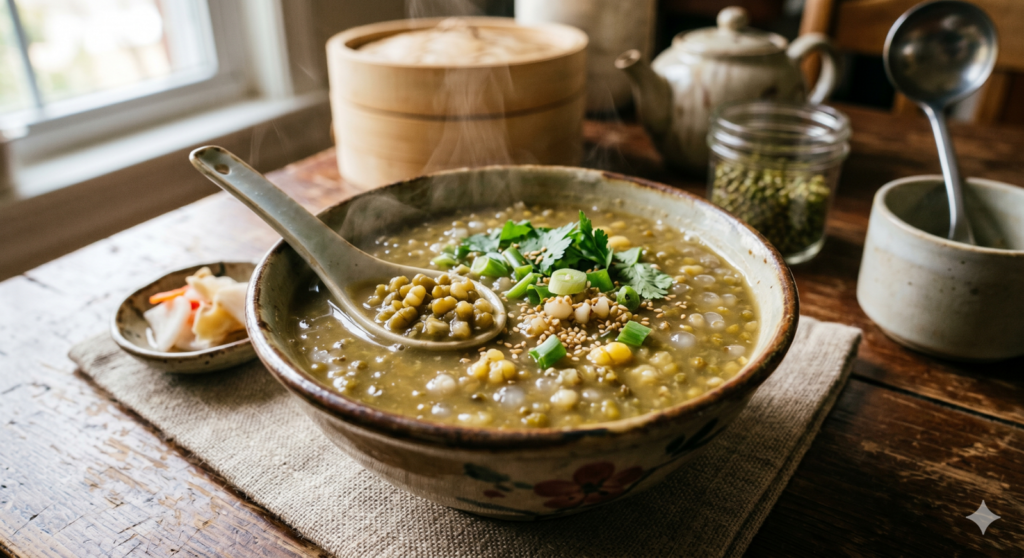
1) Green Mung Bean Soup for Breast Cancer Patients: A Nourishing and Protein-Rich Recipe
Green mung beans (whole green gram) are a highly nutritious legume rich in plant-based protein, fiber, vitamins, minerals, and antioxidants. They are easy to digest and can be a valuable addition to a balanced diet for breast cancer patients.
Why Green Mung Bean Soup?
a) It is rich source of plant-based protein to help maintain muscle mass and support tissue repair.
b) It is high in dietary fiber, which promotes healthy digestion and gut health
c) It contains antioxidants that help protect cells from oxidative stress.
d) It provides essential nutrients such as folate, magnesium, potassium, and iron.
How to prepare Green Mung Bean Soup?
Start by rinsing 1 cup of green mung beans that have been soaked overnight. In a large pot, warm a tablespoon of olive oil and gently sauté some freshly grated ginger until fragrant. Add the chopped carrot, celery, and zucchini, and cook for a few minutes to bring out their natural flavors.
Next, add the mung beans, turmeric, and water or vegetable broth. Let everything come to a boil, then lower the heat and allow the soup to simmer until the beans become soft and tender. If you prefer a creamier texture, blend a portion of the soup. Finish with a pinch of salt and a sprinkle of fresh parsley or cilantro, and enjoy this warm, comforting bowl of nourishment.
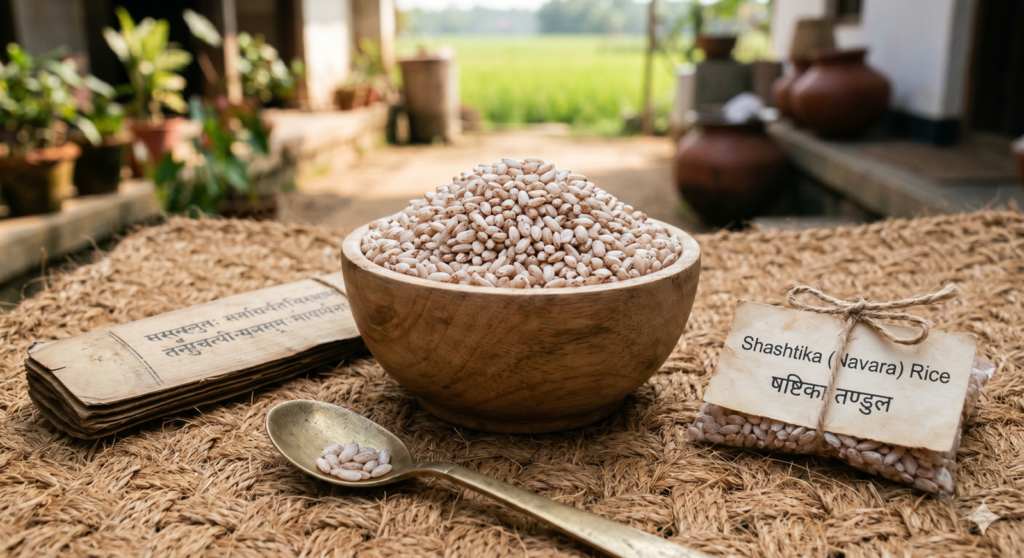
2) Shashtika Rice (Traditional Ayurvedic Medicinal Rice) for Breast Cancer Patients
Shashtika Rice which is also known as Shashtika Shali or Navara Rice (Oryza sativa), is a traditional Ayurvedic rice variety that has been valued for centuries for its nourishing and restorative qualities. It is generally harvested in approximately 60 days and the specialty of the rice is described in Ayurveda as sweet, easy to digest, nourishing, and strength-promoting. Traditionally, it has been recommended for individuals recovering from illness, fatigue, weight loss, weakness, and tissue depletion which can be very much evident in breast cancer patients.
Easy Ways to Include Shashtika Rice in a Breast Cancer-Friendly Diet
A) It can be soft-cooked rice served with steamed vegetables.
B) It can be made in form of rice porridge with ginger and turmeric.
C) Shashtika rice can be prepared with mung bean soup.
D) It can be served in form of vegetable khichdi made with rice and lentils.
E) Warm rice gruel during periods of low appetite or recovery.
Shashtika Rice is well known for its strength-promoting properties and it can help to support vitality and recovery. When included as part of a balanced diet, it can provide gentle nourishment for individuals seeking wholesome, easy-to-digest foods during their cancer journey.
3) Lakadong Turmeric Golden Milk for Breast Cancer Patients
Lakadong Turmeric Golden Milk is a warm and comforting beverage made with milk and Lakadong turmeric. Lakadong Turmeric is a premium turmeric variety grown in Meghalaya, India and is known for its naturally high curcumin content. Lakadong turmeric is well-kwon for its antioxidant and anti-inflammatory properties and for individuals undergoing breast cancer treatment or recovery, this nourishing drink can be a wholesome addition to a healthy diet and lifestyle.
Charaka Samhita describes Haridra (Turmeric) as:
a) It is supportive of detoxification in nature.
b) It helps to balance Kapha dosha.
c) It helps to promotes healthy skin and tissues.
d) It supports healthy blood and circulation.
In Ayurveda, turmeric (Haridra) has been used for centuries to support overall wellness, healthy digestion, and immune function. Modern research has shown that curcumin, the active compound in turmeric, possesses antioxidant properties that can help to protect cells from oxidative stress.
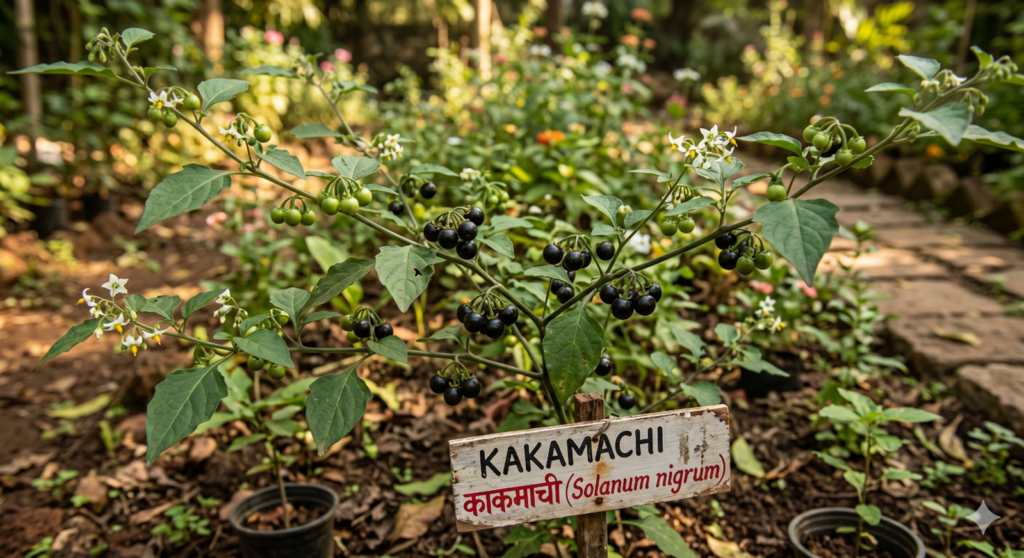
4) Kakamachi (Solanum nigrum): A Traditional Ayurvedic Herb for Breast Cancer Support
Kakamachi (Solanum nigrum) which is also commonly known as Black Nightshade, is a traditional medicinal herb used in Ayurveda for centuries to support overall health and wellness. Ayurveda describes Kakamachi as a rejuvenating herb (Rasayana) that helps maintain balance within the body and supports healthy tissue function. Traditionally, it has been used to promote liver health, aid digestion, and support the body’s natural healing processes.
For individuals living with breast cancer, Kakamachi can be considered as part of an integrative Ayurvedic wellness plan. The herb contains naturally occurring compounds such as flavonoids, polyphenols, and glycoalkaloids that have demonstrated antioxidant and immune-supportive properties. In Ayurvedic cancer care, Kakamachi is used alongside personalized nutrition, lifestyle modifications, Rasayana (rejuvenation) therapies, and other supportive herbal approaches.
Dr. Ravi Gupta, Ayurveda Cancer Consultant
📞 Call / WhatsApp: +91 98192 74611
📧 Email: cancerinayurveda@gmail.com
💻 Online Consultations Available for Patients Across the USA
To learn more or schedule a consultation, contact Dr. Ravi Gupta, Ayurveda Cancer Consultant today.