
Acute Myeloid Leukemia (AML) is a rapidly progressing cancer of the blood and bone marrow. In Acute Myeloid Leukemia (AML) white blood cells grows uncontrollably and due to overcrowding of the abnormal cells, normal blood cell production is affected. Common symptoms include fatigue, fever, recurrent infections, bleeding, weakness, and bone pain.
AML is the most common acute leukemia in adults, with an incidence of around 3–5 cases per 100,000 people annually. The disease is more common in older adults, with the average age at diagnosis being 65–70 years. Despite advances in treatment, the overall 5-year survival rate remains approximately 30%.
About Curcumin
Curcumin is the primary bioactive compound found in turmeric (Curcuma longa), a flowering plant belonging to the ginger family. Among the many natural compounds present in turmeric, curcuminoids, especially curcumin is responsible for its characteristic bright yellow colour and most of its extensively researched therapeutic benefits. It is widely recognized for its potent anti-inflammatory, antioxidant, and immune-supportive properties.
Scientific studies suggest it can help to regulate inflammatory pathways, reduce oxidative stress and support healthy cellular function. These properties have made curcumin a subject of great interest in the field of integrative health and supportive cancer care.
Mechanism action of action of Curcumin in Acute Myeloid Leukemia (AML)
Turmeric-derived curcumin has gained significant scientific attention for its potential role in the management of Acute Myeloid Leukemia due to its anti-inflammatory, antioxidant, antiproliferative, and pro-apoptotic properties.
1) Induction of Apoptosis (Programmed Cancer Cell Death)
Curcumin induced apoptosis in AML cells via activation of caspases and up-regulation of pro-apoptotic proteins like Bax, and down-regulation of anti-apoptotic proteins like Bcl-2. This mechanism enables the self-destruct of leukemic cells without significantly affecting normal cells.
2) Inhibition of NF-κB Signaling
In addition, suppression of the NF-κB pathway is one of the major mechanisms of curcumin, which is often overactivated in AML. NF-kappa B is implicated in the survival of leukemic cells, inflammation, resistance to chemotherapy and uncontrolled proliferation. Curcumin could block this pathway, decrease leukemic cell growth and increased sensitivity to therapy.
3) Cell Cycle Arrest
Curcumin has been shown to interrupt the cell cycle of AML cells, particularly in the G1/S and G2/M phases, thereby slowing down or stopping uncontrolled multiplication of leukemic blasts.
4) Suppression of Angiogenesis
AML progression may be supported by abnormal blood vessel formation in the bone marrow microenvironment. Curcumin inhibit angiogenic factors such as VEGF, thereby limiting nutritional support for leukemic cells.
5) Epigenetic Regulation
Research suggests curcumin can influence gene expression through epigenetic modulation, including inhibition of histone acetyltransferases and DNA methylation pathways. This can also help in suppressing oncogenic signaling in AML.
Haridra or Haldi in Ayurveda
Turmeric also botanically identified as Curcuma longa, is one of the most important medicinal herbs in Ayurveda. It is widely respected for its powerful anti-inflammatory, blood-purifying, wound-healing, antioxidant, and immunity-supportive properties.
Properties of Haridra as per Ayurveda is described as:
- A) Rasa (Taste): Tikta (bitter), Katu (pungent).
- B) Guna (Qualities): Laghu (light), Ruksha (dry).
- C) Virya (Potency): Ushna (hot).
- D) Vipaka (post-digestive effect): Katu (pungent).
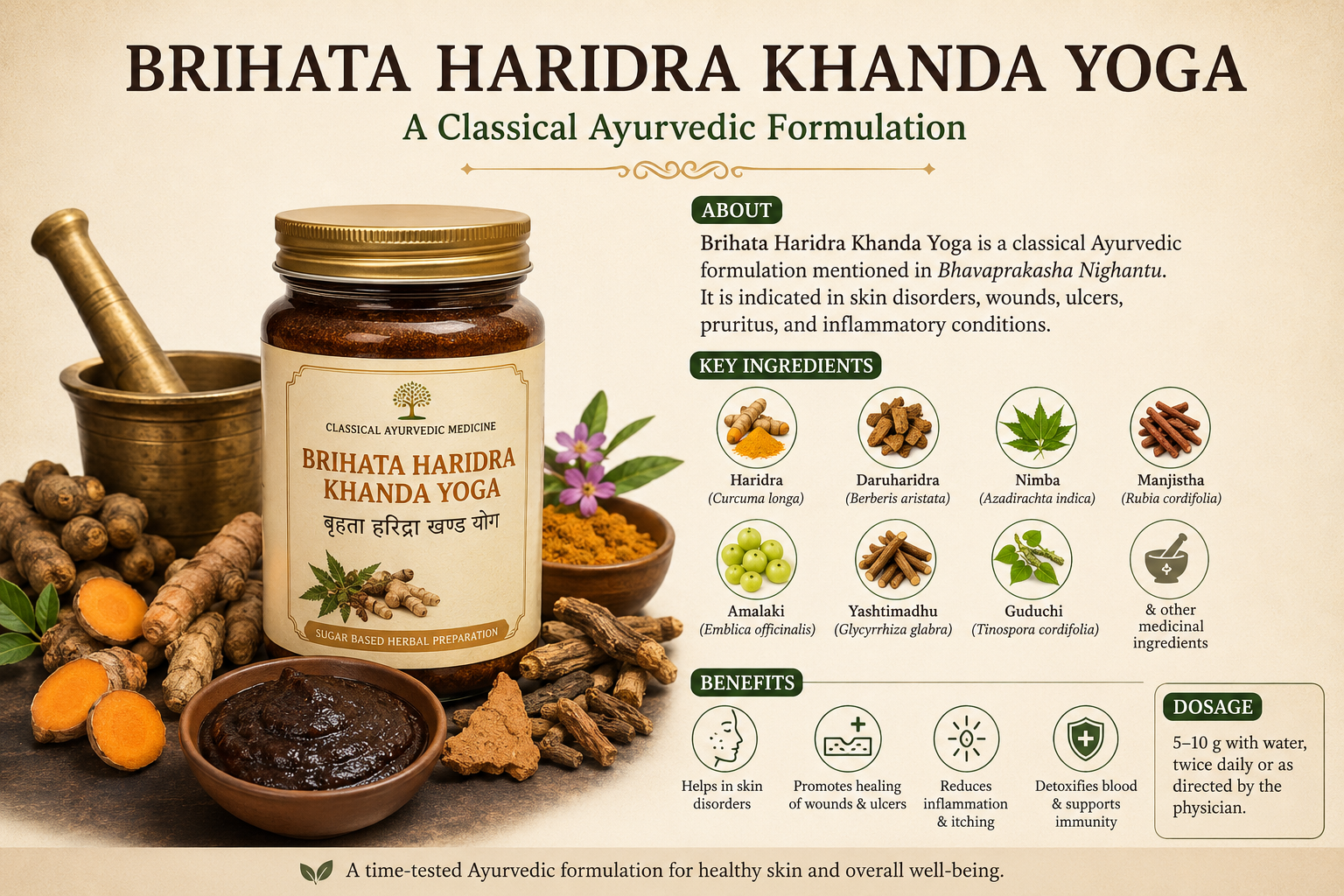
Brihata Haridra Khanda Yoga
निशाचूर्णस्य कुडवं त्रिवृत्पलचतुष्टयम् । अभया तत्समा देया सार्द्धप्रस्थद्वयं सिता ॥१८॥ दर्वी मुस्ता यमान्यौ द्वौ चित्रकं कटुरोहिणी । अजाजी पिप्पली शुण्ठी त्रिजातं कृमिकण्टकम् ॥ अमृता वासकं कुष्ठं त्रिफला चव्यधान्यकम् । मृतलौहं मृताभ्रञ्च प्रत्येकं कोलसम्मितम् ॥२०॥ पचेन्मृद्वग्निना वैद्यो भाजने मृन्मये नवे । कर्षार्द्धञ्च ततः खादेदुष्णतोयानुपानतः ॥२१॥ शीतपित्तोदर्दकोठकण्डूपामाविचर्चिकाः । जीर्णज्वरकृमीन् पाण्डुशोथादींश्च विनाशयेत् ॥२२॥
A formulation is prepared using Turmeric (Haridra), Trivrit (Nishoth), and Haritaki as the main ingredients, blended with sugar. To this are added fine powders of several supportive herbs including Daruharidra, Musta, Ajwain, Ajmoda, Chitrakmool, Kutki, Cumin, Pippali, Dry Ginger, Trijata (Dalchini, Elaichi, and Tejpatra), Vidanga, Guduchi, Vasaka, Kustha, Triphala, Chavya, Dhanyaka, along with Lauha Bhasma and Abhraka Bhasma.
The ingredients are processed together and prepared into a medicinal formulation traditionally administered with warm water. This classical Ayurvedic preparation is considered beneficial in conditions such as urticaria, itching, eczema, skin disorders, chronic fever, worm infestations, anemia, and inflammatory conditions.
Benefit of Brihata Haridra Khanda Yoga in Acute Myeloid Leukemia
1) Anti-Proliferative and Pro-Apoptotic Activity
The primary ingredient, Curcumin (from Haridra), has been extensively studied for its impact on leukemic cell lines. Curcumin has been shown to inactivate the AKT signaling pathway, a key driver of cell survival and uncontrolled proliferation in AML.
2) Chemosensitization and Synergy
Preclinical studies suggest that curcumin can make AML cells more sensitive to standard chemotherapy agents like Cytarabine and Azacitidine. It also helps to modulate Multi-Drug Resistance (MDR) proteins, potentially allowing lower, less toxic doses of conventional drugs to remain effective.
3) Hematological Support (Rakta-Shodhak)
Certain herbs in Brihata Haridra Khanda Yoga (such as Haridra, Trivrit, and Vidanga) helps to cleanse the Rakta Dhatu (blood) and Majja Dhatu (bone marrow) of metabolic toxins (Ama). It also proves beneficial in spectrum of Rakta-Pradoshaja Vikara (disorders of the blood tissue).
4) Immune Modulation
Herbs like Guduchi and Pippali within the formulation enhance the body’s innate defense mechanisms, which are often compromised by both the disease and chemotherapy. By improving Agni (digestive fire), it helps combat the fatigue and poor appetite common in leukemia patients.
Dr. Ravi Gupta, Ayurveda Cancer Consultant
📞 Call / WhatsApp: +91 98192 74611/9967239823
🌐 www.cancerinayurveda.com
📧 cancerinayurveda@gmail.com