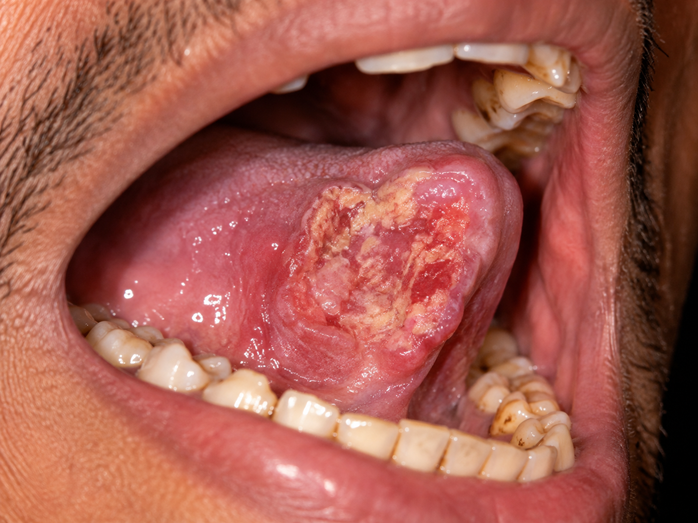
Mouth cancer is one of the most common cancers in India and remains a major public health concern. India accounts for nearly one-third of the global burden of oral cancer, with an estimated 135,000–145,000 new cases diagnosed each year. It is among the top three most common cancers in the country and is the most frequently diagnosed cancer among Indian men in many regions.
Triple-Negative Breast Cancer (TNBC) is an aggressive subtype of breast cancer in which the cancer cells do not have estrogen receptors (ER), progesterone receptors (PR), or HER2 receptors. It accounts for approximately 10–15% of all breast cancer cases in the United States, with an estimated 30,000–45,000 women diagnosed each year. TNBC is more commonly seen in younger women, African American women, and individuals carrying BRCA1 gene mutations.
Mouth cancer is one of the most common cancers in India and represents a major public health concern due to the widespread use of tobacco, gutkha, betel nut (areca nut), smoking, and alcohol. India accounts for nearly one-third of the global burden of oral cancer and approximately 141,000 new mouth cancer cases diagnosed every year.
Breast cancer is the most commonly diagnosed cancer among women in the United States, excluding skin cancers, and remains the second leading cause of cancer-related deaths among women after lung cancer. In 2025, an estimated 316,950 women are expected to be diagnosed with invasive breast cancer. Despite significant advances in early detection and treatment, breast cancer is projected to cause approximately 42,170 deaths among women and 510 deaths among men in the United States during 2025.
Oral Submucous Fibrosis (OSMF) is a chronic, progressive, and potentially malignant (precancerous) disorder that affects the lining of the mouth. It is characterized by inflammation followed by the gradual formation of fibrous (scar-like) tissue beneath the oral mucosa, leading to stiffness and reduced flexibility of the cheeks, lips, soft palate, and surrounding tissues.