
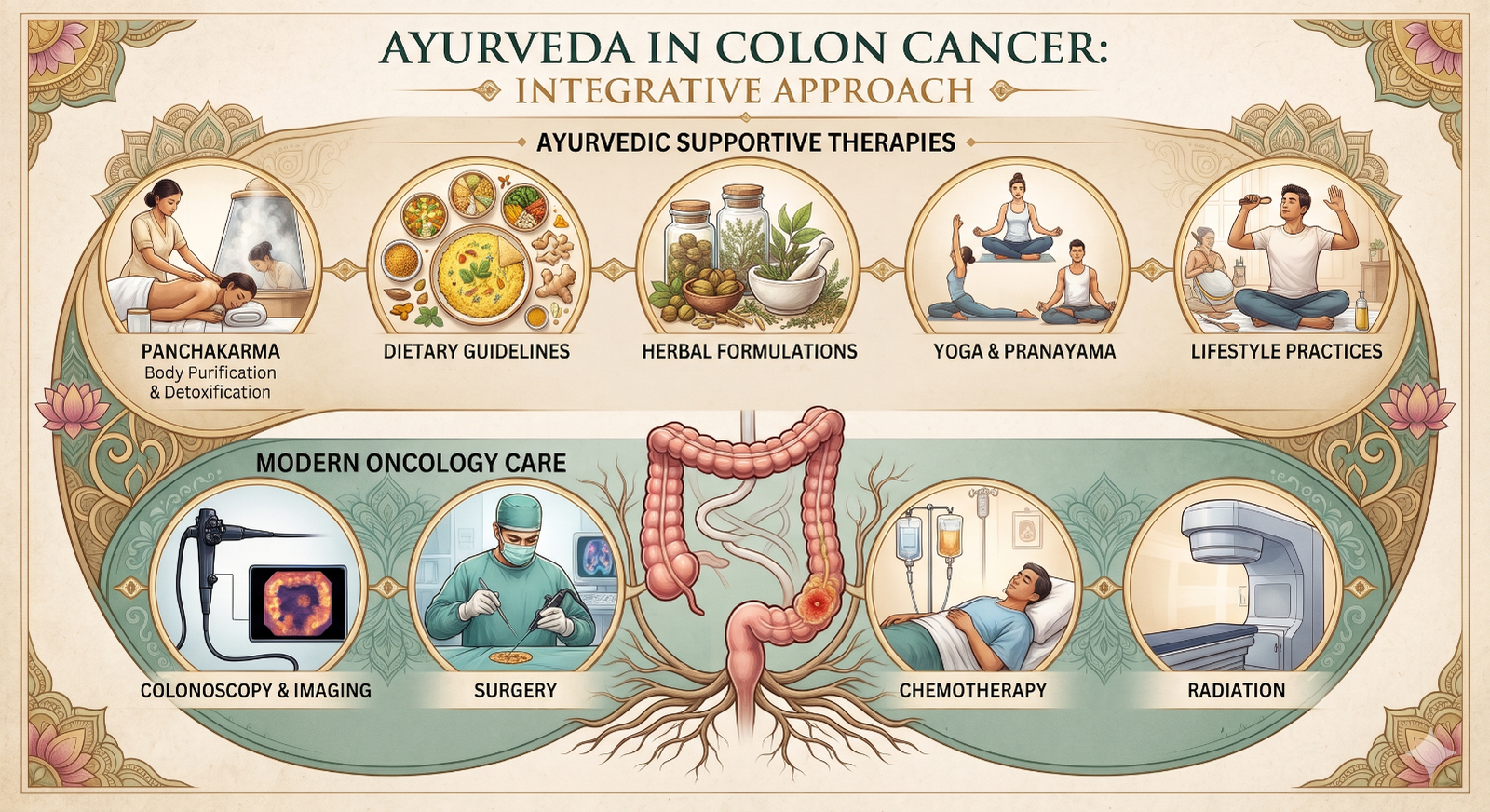
Colorectal cancer is the fourth most common cancer in India, with about 65,000 to 69,000 new cases and over 40,000 deaths every year. Historically, it has been known as a disease of the elderly in low-incidence regions. Still, India is witnessing an alarming surge in “early-onset” cases in adults in their 20s and 30s. The rising incidence is largely concentrated in rapidly urbanising hubs like Bengaluru, Chennai and Mumbai, with men being significantly more affected than women at an age-adjusted rate of 5.7 versus 3.4 per 100,000.
This demographic change is largely driven by the rapid lifestyle changes such as the shift to processed foods and refined carbohydrates, increasing obesity rates and the increasingly sedentary work environment. Moreover, in young adults and primary care physicians, early warnings signs such as blood in stool or unexplained anemia are frequently attributed to benign causes such as hemorrhoids or IBS and therefore nearly half of all patients in India are diagnosed at an advanced stage.
Causes of ‘Blood in the Stools’
It’s important to differentiate piles (hemorrhoids) from ulcerative colitis (UC) and colon cancer. These are completely different pathologies, with different diagnostic workup and affecting different populations. All three may present with rectal bleeding, but they differ markedly in clinical presentation, the nature of the bleeding and systemic signs.
Key Differentiating Features
A) Bleeding Characteristics:
1) Piles: It typically produces bright red blood that streaks the toilet paper or coats the outer surface of hard stool; blood is rarely mixed inside the stool.
2) Ulcerative Colitis: Features blood mixed directly into loose stools or inflammatory diarrhea, frequently accompanied by mucus and pus due to mucosal friability.
3) Colon Cancer: It involves dark or bright red blood mixed into the stool, or microscopic (occult) bleeding that results in progressive iron deficiency anemia.
B) Associated Symptoms:
1) Piles: It is frequently accompanied by local anal pain, itching, irritation, or palpable prolapsed tissue during bowel movements.
2) Ulcerative Colitis: It is characterized by chronic, recurring diarrhea, urgent abdominal cramping, tenesmus (a persistent feeling of incomplete evacuation), fatigue, and weight loss.
3) Colon Cancer: It presents with progressive, insidious changes in bowel habits (such as persistent constipation or alternating diarrhea), unexplained weight loss, fatigue, and occasionally a palpable abdominal mass.
C) Disease Course and Onset:
1) Piles: Acute flare-ups are often episodic and triggered by specific mechanical factors like constipation, heavy lifting, or pregnancy.
2) Ulcerative Colitis: It follows a chronic, relapsing-remitting inflammatory course affecting the colonic mucosa.
3) Colon Cancer: It follows a progressive, steady clinical trajectory where symptoms worsen incrementally over months.
Bleeding in Colon Cancer Patient
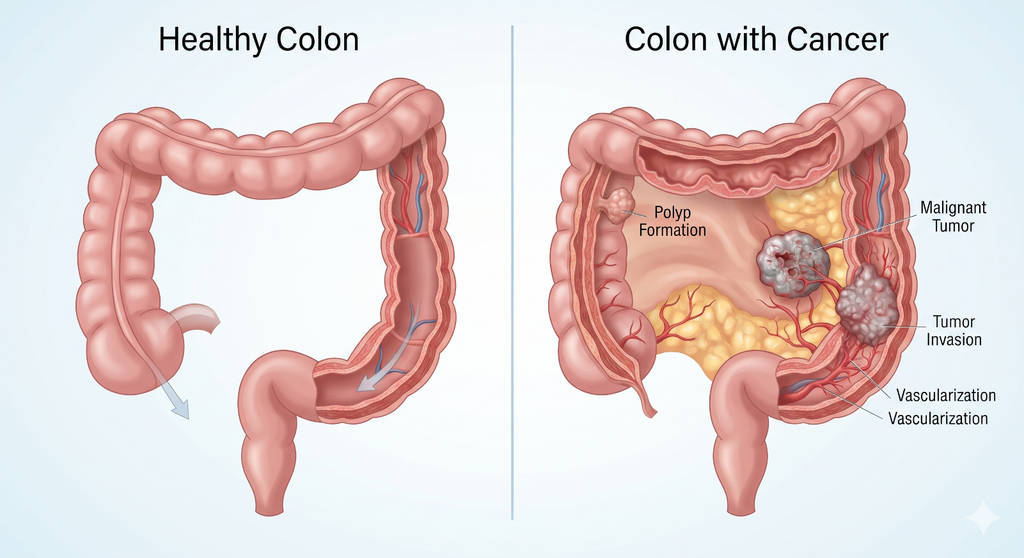
Bleeding is one of the common symptoms of colon cancer. It usually occurs when the growing tumor damages the normal lining of the colon and the blood vessels supplying it. The tumor surface often becomes fragile and ulcerated, making it more likely to bleed during the passage of stool.
A) Why Does Bleeding Occur?
1) Fragile Blood Vessels: As the tumor grows, it stimulates the formation of new blood vessels. These vessels are often weak and easily damaged, leading to bleeding.
2) Ulceration and Tissue Damage: It is characterized by rapid tumor growth may affect its blood supply, causing tissue damage and ulcer formation. This exposes the underlying blood vessels and results in bleeding.
3) Friction from Stool: The passage of stool repeatedly irritates the ulcerated tumor surface, which can cause bleeding.
4) Tumor Invasion: As the cancer progresses, it may extend into surrounding tissues and damage nearby blood vessels, increasing blood loss.
B) Clinical Presentation According to Tumor Location
The appearance of bleeding often depends on where the tumor is located in the colon.
1) Right-Sided Colon Cancer (Cecum and Ascending Colon):
a) Bleeding is usually hidden and may not be visible to the naked eye.
b) Patients may develop iron-deficiency anemia, weakness, and fatigue.
c) Sometimes, stools may appear dark due to the mixing of blood with fecal matter.
2) Left-Sided Colon Cancer (Descending and Sigmoid Colon):
a) Patients may notice red or dark-red blood in their stools.
b) Blood may be mixed with stool or appear on its surface.
c) Constipation and changes in bowel habits may also occur.
3) Rectal Cancer:
a) Bright red blood may appear during or after defecation.
b) Blood may be noticed on toilet paper or coating the stool.
c) Patients may also experience rectal discomfort, frequent urges to pass stool, or a feeling of incomplete evacuation.
Contact Dr. Ravi Gupta for Ayurvedic Treatment of Colon Cancer
For information and consultation regarding Ayurvedic treatment for colon cancer, you may contact Dr. Ravi Gupta, M.D. (Ayurveda), Ayurvedic Cancer Consultant, with 12+ years of oncology experience. He provides guidance on Ayurvedic treatment approaches, Panchakarma, Rasayana therapy, dietary management, and integrative cancer care.
Contact Details:
– Doctor: Dr. Ravi Gupta, M.D. (Ayurveda)
– Specialization: Ayurvedic Oncology & Panchakarma
– Website: www.cancerinayurveda.com
– Email: cancerinayurveda@gmail.com
– Consultation: Online and in-person (subject to availability)
– Clinic Locations: Mumbai and Pune, India
For appointments and further information, please contact the clinic directly.