
Colon cancer develops in the large intestine (colon), often starting as small growths called polyps that may gradually turn cancerous. Some common symptoms include changes in bowel habits, blood in stools, abdominal pain, unexplained weight loss, tiredness, and anaemia. The risk of developing colon cancer increases with age, family history, obesity, lack of physical activity, smoking, alcohol consumption, and unhealthy eating habits.
Colon cancer is a major health concern worldwide. According to GLOBOCAN 2022, around 1.9 million people were diagnosed with colorectal cancer, and nearly 904,000 deaths were reported globally. It is the third most common cancer and the second leading cause of cancer-related deaths worldwide. Colon cancer alone accounted for approximately 1.14 million new cases. Early diagnosis, regular screening, and timely treatment can help improve treatment outcomes and survival.
Stages of Colon Cancer
Colon cancer is classified into five stages (Stage 0 to Stage IV), depending on how deeply the cancer has grown and whether it has spread to other parts of the body.
1) Stage 0: Cancer is limited to the innermost lining of the colon.
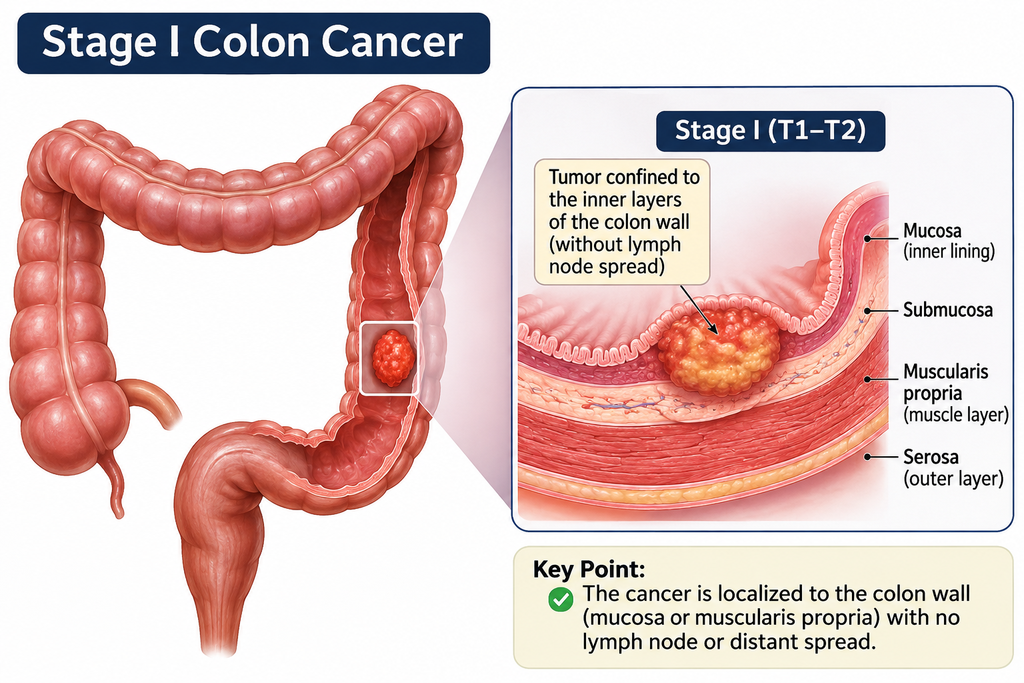
2) Stage I: Cancer has grown into the inner layers of the colon wall but has not spread to lymph nodes.
3) Stage II: Cancer has grown deeper into or through the colon wall but has not spread to nearby lymph nodes.
4) Stage III: Cancer has spread to nearby lymph nodes but not to distant organs.
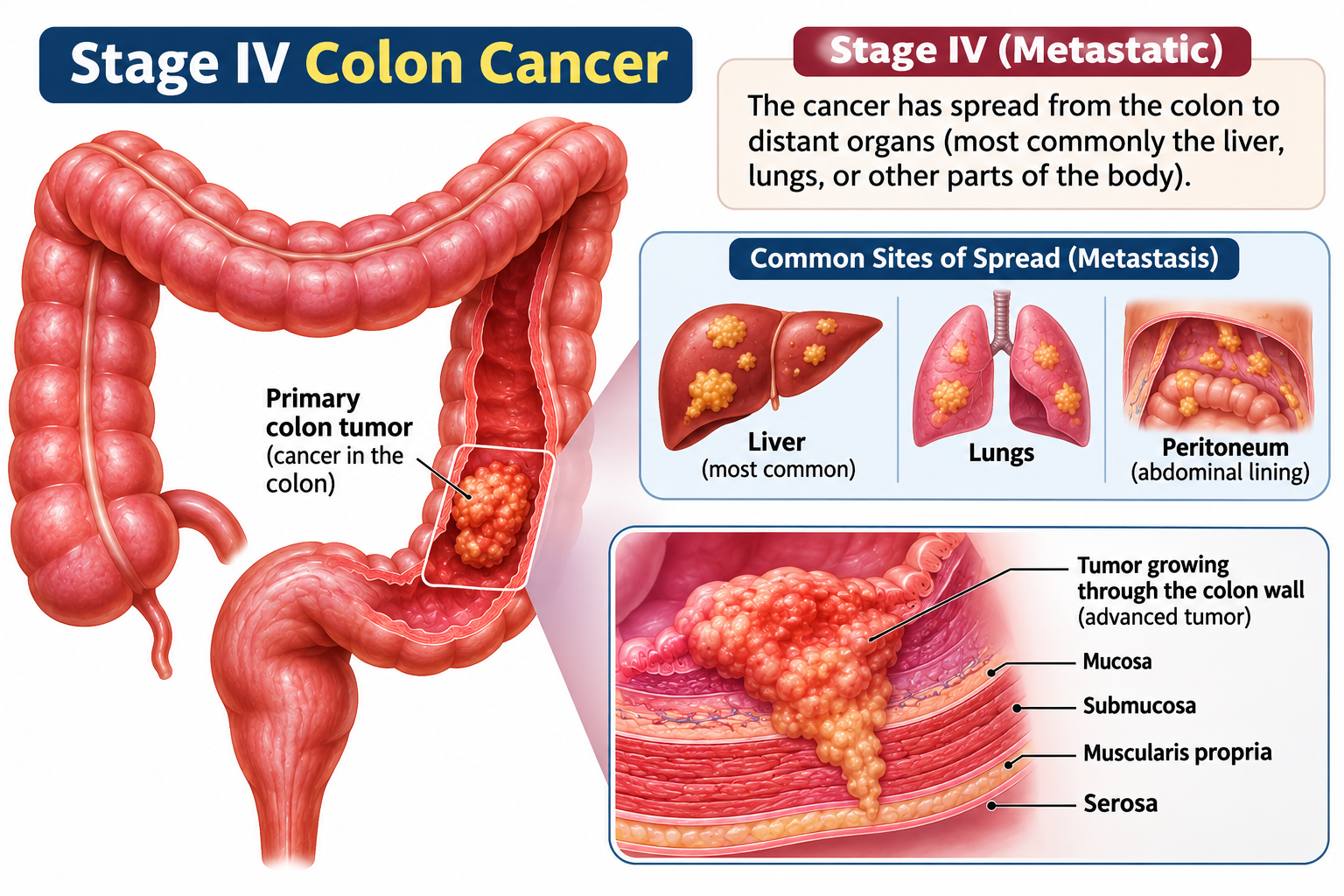
5) Stage IV: Cancer has spread to distant organs, such as the liver, lungs, or peritoneum. This is known as metastatic colon cancer.
Integrative Ayurvedic Approach to Stage I Colon Cancer
Stage I colon cancer is an early-stage disease in which the tumour is limited to the colon wall, without lymph node involvement or distant metastasis. Surgery is the primary and definitive treatment, with five-year survival generally exceeding 90%.
In integrative oncology, Ayurveda can be used alongside allopathic treatment to support digestion, nutritional recovery, bowel function and overall well-being. It should never replace or delay surgery.
1) Ayurvedic Management Alongside Surgery
Pre-operative care
a) Focus on adequate nutrition and easily digestible meals.
b) Use mild digestive herbs only after medical approval.
c) Avoid strong detoxification therapies and potentially blood-thinning herbs.
Post-operative recovery
a) Gradually introduce food as advised by the surgeon.
b) Support digestion, hydration and bowel movements.
c) Avoid strong purgatives, Basti and Panchakarma until complete surgical healing.
Long-term care
a) Consider individualised Rasayana therapy.
b) Follow a balanced, fibre-rich diet as tolerated.
c) Maintain physical activity and healthy lifestyle habits.
d) Continue regular colonoscopy, CEA testing and oncology follow-ups.
2) Ayurvedic Herbs and Formulations
a) Haridra (Curcumin): Studied for anti-inflammatory and antioxidant effects.
b) Triphala: Traditionally used for digestive health.
c) Guduchi: Traditionally used as a Rasayana.
d) Yashtimadhu: Studied for mucosal-protective properties.
3) Classical formulations:
a) Somanathi Tamra Bhasma: A copper-based herbo-mineral preparation traditionally used in selected digestive and metabolic disorders.
b) Arshohar Rasa (Arshakuthar Rasa): Traditionally indicated for Arsha (haemorrhoids) and associated digestive disturbances.
These formulations have no established clinical role in treating colon cancer or preventing its recurrence. Herbo-mineral preparations require particular caution because of potential heavy-metal toxicity and drug interactions.
4) Diet and Lifestyle
a) Prefer freshly prepared, balanced meals with adequate protein.
b) Include fruits, vegetables and fibre as tolerated.
c) Maintain hydration and a healthy body weight.
d) Limit processed meat, excessive red meat and highly processed foods.
e) Encourage regular physical activity.
Integrative Ayurvedic Approach to Stage II and Stage III Colon Cancer
In Stage II colon cancer, the tumour has grown through the muscular layer of the colon or into nearby structures, while in Stage III, cancer has spread to regional lymph nodes. In both stages, surgery is the primary treatment. Depending on the risk factors, adjuvant chemotherapy, commonly FOLFOX or CAPOX, is recommended to reduce the risk of recurrence.
1) Post-operative Recovery
After surgery, the focus is on wound healing, restoring bowel function and improving digestion.
a) Gradually introduce easily digestible foods such as rice gruel (Manda), Peya, mung dal soup (Yusha) and soft meals.
b) Yashtimadhu and Shatavari can be considered for mucosal support after reviewing contraindications.
c) Kasisadi Taila Basti can be considered as a specialised Ayurvedic intervention for selected patients after complete surgical recovery and confirmation of anastomotic healing. It should not be administered during the early post-operative period or without the surgeon’s approval.
d) Arka Lavana can be considered traditionally for digestive complaints, but its use requires caution, particularly in patients with altered bowel function, electrolyte disturbances or kidney problems.
2) Post-Chemotherapy Care and Rasayana
After completion of chemotherapy, the focus shifts towards nutritional rehabilitation, recovery and long-term health.
Selected Ayurvedic medicines such as:
a) Guduchi: It is traditionally used for Rasayana and immune support.
b) Amalaki: It is traditionally used for antioxidant and digestive support.
c) Ashwagandha: It is traditionally used for strength and recovery.
d) Triphala: It is traditionally used for bowel regulation and digestive health.
e) Bhallataka Ghrita: It is a classical formulation traditionally used in selected Ayurvedic conditions, requiring careful assessment because of its potential toxicity.
Diet should include freshly prepared foods, vegetables, fruits, adequate protein and appropriate fibre. Regular physical activity, yoga, breathing exercises and adequate sleep can also support recovery.
Integrative Ayurvedic Approach to Stage IV Colon Cancer
Stage IV colon cancer involves the spread of cancer to distant organs, commonly the liver, lungs and peritoneum. Modern treatment includes chemotherapy, targeted therapy, immunotherapy and surgery in selected cases.
From an Ayurvedic perspective, it may be correlated with Sarvadhatugata Arbuda, involving Ojas Kshaya, Dhatu Kshaya and Tridosha imbalance. Ayurveda may complement conventional treatment through supportive care, symptom management and nutritional support.
1) Ayurvedic Treatment
a) Liver health: Guduchi, Bhumyamalaki and Punarnava.
b) Digestive health: Kutaja, Bilva and Musta.
c) Nutritional support: Agnideepana and Brimhana approaches.
d) Pain and sleep: Dashamoola, Tagara and Jatamansi.
e) General strength: Rasayana therapy according to patient tolerance.
2) Rasayana Therapy
Rasayana aims to improve strength, nourishment, vitality and Ojas.
a) Bala Rasayana: It is traditionally used for strength and nourishment.
b) Kushmanda Avaleha: It is used for nutritional support and general weakness.
c) Guduchi: It is traditionally used for immune and liver support.
d) Ashwagandha: It supports strength and helps manage fatigue.
e) Amalaki: It provides antioxidant support.
f) Chyawanprash: It is used for general rejuvenation.
Colon Cancer Ayurvedic Specialist – Dr. Ravi Gupta
Colon cancer requires timely diagnosis, appropriate oncological treatment, and comprehensive patient care. Dr. Ravi Gupta, M.D. (Ayurveda), Ayurveda Cancer Consultant and Panchakarma Specialist, offers an integrative Ayurvedic approach for patients with colon cancer, focusing on individualized Ayurvedic treatment, dietary guidance, Rasayana therapy, and supportive care.
Consult Dr. Ravi Gupta for Ayurvedic guidance in colon cancer care.
Contact Details
Doctor: Dr. Ravi Gupta, M.D. (Ayurveda)
Specialisation: Ayurvedic Oncology & Panchakarma
Phone / WhatsApp: +91-98192 74611
Email: cancerinayurveda@gmail.com
Website: www.cancerinayurveda.com