
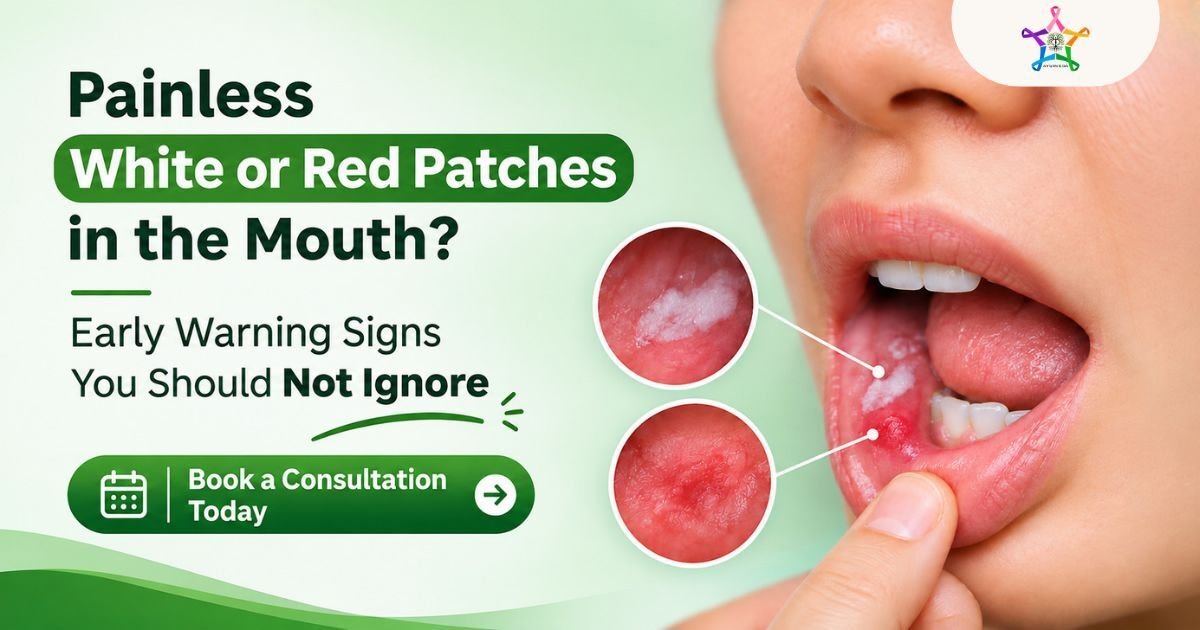
A small patch inside your cheek does not hurt. It does not bleed. So you ignore it.
That is exactly why it is dangerous. Many early signs of mouth cancer are painless, which makes them easy to miss. In India, where tobacco and areca nut use is common, missing them can be costly.
This guide shows you what to look for and when to act.
What Are the Early Signs of Mouth Cancer?
The most common early warning signs are a white or red patch that will not rub off, a mouth ulcer lasting more than three weeks, and a lump on the lip or inside the mouth. These patches are often painless. Any of them needs a check by a dentist or doctor.
White Patches (Leukoplakia): Painless but Worth a Check
Leukoplakia is a white or grey patch on the tongue, gums, cheek lining or floor of the mouth. According to the NHS, these patches are usually painless, irregular in shape and slightly raised. They cannot be scraped away.
That last point matters. A white coating that wipes off is more likely to be oral thrush, a fungal infection.
Most white patches are not cancerous. Some, however, carry precancerous changes, so a persistent patch always deserves a closer look.
Red Patches (Erythroplakia): The Higher-Risk Sign
Erythroplakia appears as a smooth or velvety red patch. It may bleed easily when scraped.
Red patches are less common than white ones. They are, however, more likely to contain precancerous or cancerous cells. A patch that mixes red and white areas, called erythroleukoplakia, also needs prompt attention.
Other Early Signs of Mouth Cancer to Watch For
Patches are not the only clue. See a doctor if you notice any of these for more than two to three weeks:
- A mouth ulcer that does not heal
- A lump or thickening in the cheek, lip or neck
- Pain or difficulty when chewing, swallowing or speaking
- Numbness or unexplained bleeding in the mouth
- Loose teeth or dentures that suddenly stop fitting
Why Mouth Cancer Is a Serious Concern in India
India carries one of the highest burdens of oral cancer in the world. A 2026 GLOBOCAN-based analysis in ecancermedicalscience reported 143,759 new oral cancer cases in India in 2022. That is about one in ten of all cancers diagnosed.
Chewing tobacco, gutka, smoking, areca nut and alcohol are the main risk factors. Sharp teeth or poorly fitting dentures that rub constantly can also irritate the lining.
Where Ayurveda for Mouth Cancer Fits In
Let us be clear. A suspicious patch needs a biopsy and an oncologist’s diagnosis. Ayurveda is not a substitute for surgery, radiotherapy or chemotherapy.
Where Ayurveda for mouth cancer helps is in supportive care alongside medical treatment. It can help manage mouth sores, dryness, appetite loss and fatigue, and support recovery through diet and lifestyle.
For families seeking Ayurvedic Treatment for Mouth Cancer in UP, our doctors offer teleconsultations and coordinate with your oncologist to avoid herb–drug interactions. Learn more about our Ayurvedic support for head and neck cancer.
A Two-Week Habit That Could Save Your Life
Once a month, check your mouth in a well-lit mirror. Look at your tongue, gums, cheeks and lips. Any patch, sore or lump still there after two weeks deserves a professional check.
Spotting the early signs of mouth cancer in time gives you the widest choice of treatment. And when treatment begins, Cancer In Ayurveda is here to support your strength, comfort and recovery every step of the way.
Frequently Asked Questions
1. Are white patches in the mouth always cancer?
No. Most white patches are harmless and caused by simple irritation, thrush or tobacco use. However, a patch that will not rub off and lasts more than two weeks should be examined, since a small number contain precancerous cell changes.
2. Is mouth cancer painful in the early stages?
Usually not. Many early signs of mouth cancer, such as white or red patches, cause no pain at first. This is why many people delay seeing a doctor. Pain, bleeding and difficulty swallowing tend to appear as the disease advances.
3. Can Ayurveda cure mouth cancer?
No credible evidence shows Ayurveda cures mouth cancer. Ayurveda for mouth cancer works best as supportive care alongside surgery, radiotherapy or chemotherapy, helping with mouth sores, appetite, fatigue and overall wellbeing. Always continue the full treatment plan your oncologist recommends.
4. Who is most at risk of mouth cancer?
People who chew tobacco, gutka or areca nut, smoke, or drink alcohol regularly face the highest risk. Men are affected more often than women. Poor oral hygiene and dentures that constantly rub the gums can also add to the risk.
5. Can I get Ayurvedic Treatment for Mouth Cancer in UP?
Yes. Patients and families seeking Ayurvedic Treatment for Mouth Cancer in UP can consult our doctors through online teleconsultation. We offer supportive care plans that work alongside your oncologist’s treatment, focusing on symptom relief, nutrition and quality of life.