

Breast cancer is the most commonly diagnosed cancer among women in the United States and remains one of the leading causes of cancer-related deaths. It develops when abnormal cells in the breast grow uncontrollably, forming a malignant tumor and can spread to other parts of the body if left untreated.
According to recent estimates, more than 320,000 women in the United States are expected to be diagnosed with invasive breast cancer annually and over 40,000 women may die from the disease each year. Breast cancer accounts for nearly 30% of all newly diagnosed cancers in women, and approximately 1 in 8 women will develop breast cancer during their lifetime.
What is Chemotherapy Related Fatigue in Breast Cancer Patients?
Chemotherapy-related fatigue is one of the most common and distressing side effects experienced by breast cancer patients undergoing chemotherapy. It is characterized by a persistent feeling of physical, emotional, and mental exhaustion that is disproportionate to recent activity and is not fully relieved by rest or sleep. Patients often report reduced energy levels, difficulty concentrating, decreased physical activity, and impaired quality of life. Studies indicate that a majority of breast cancer patients experience fatigue during chemotherapy and symptoms sometimes persisting for months or even years after treatment completion.
Concept of Klama in Ayurveda: A Special Reference to Chemotherapy-Related Fatigue in Breast Cancer Patients
Klama is an Ayurvedic term that describes a deep sense of physical and mental exhaustion that is different from ordinary tiredness. A person with Klama feels unusually fatigued even when they have not done any strenuous work or physical activity. This fatigue can gradually become more intense and may affect concentration, alertness, and the ability to engage with the world through the senses.
Unlike normal tiredness that improves with rest or sleep, Klama may persist even after a person wakes up and appears fully rested. Individuals may continue to experience a lingering sense of heaviness, low energy, mental fog, and reduced motivation. In Ayurveda, Klama is viewed as a state of depleted vitality that affects both the body and the mind, making it more than just everyday fatigue caused by exertion.
From an Ayurvedic perspective, chemotherapy-related fatigue can therefore be understood as resembling Klama, as both represent a state of depleted physical and mental energy that significantly impairs quality of life and daily functioning. This conceptual similarity provides a useful framework for exploring Ayurvedic approaches to managing fatigue in breast cancer patients undergoing chemotherapy.
How to deal with Chemotherapy Related Fatigue or Klama through Ayurveda in Breast Cancer Patients
A) Shirodhara in the management of Chemotherapy Related Fatigue or Klama
Shirodhara is one of the important external Ayurvedic therapies in which a continuous stream of medicated decoctions, different herbal oil, or medicated milk, is gently poured over the forehead for a specific duration. It is traditionally indicated for conditions involving mental stress, anxiety, sleep disturbances, and neurological imbalances.
Shirodhara can help in the management of chemotherapy-related fatigue or klama through several mechanisms:
1) Pacification of Vata Dosha: The gentle and continuous flow of medicated oil in Shirodhara procedure helps to calm aggravated Vata Dosha, which is often associated with fatigue, restlessness, and nervous system dysfunction.
2) Reduction of Psychological Distress: It is a well-known fact that many cancer patients experience anxiety, depression, and emotional stress during chemotherapy. Shirodhara promotes deep relaxation and mental tranquillity in breast cancer patients.
3) Enhancement of Mental Clarity: By calming the mind and sensory organs, Shirodhara can help to reduce cognitive fatigue, poor concentration, and mental exhaustion.4) Improvement of Sleep Quality: Sleep disturbances are common contributors to fatigue in breast cancer patients undergoing physiotherapy. Shirodhara is well known to improve sleep and promote restorative rest.

B) Abhyanga (Medicated Oil Massage) in the Management of Chemotherapy-Related Fatigue (Klama)
Abhyanga, a traditional Ayurvedic therapeutic massage performed with warm herbal oils, is widely recognized for its restorative and rejuvenating effects on both physical and psychological well-being. In cancer care, Abhyanga can serve as a beneficial integrative therapy for patients experiencing Chemotherapy-Related Fatigue (CRF), one of the most common and distressing side effects of cancer treatment.
Abhyanga helps to address chemotherapy-related fatigue through several mechanisms:
1) Promotes Deep Relaxation: Abhyanga (Medicated Oil Massage) can help to calm the nervous system, reduce stress, and promote a sense of overall well-being.
2) Reduces Musculoskeletal Discomfort: Many cancer patients experience body aches, stiffness, and generalized weakness during treatment. Abhyanga can help to alleviate these symptoms and improve physical comfort.
3) Enhances Quality of Life: By reducing physical and emotional distress, Abhyanga can help the patients to maintain greater functional capacity and improve their overall quality of life during treatment.

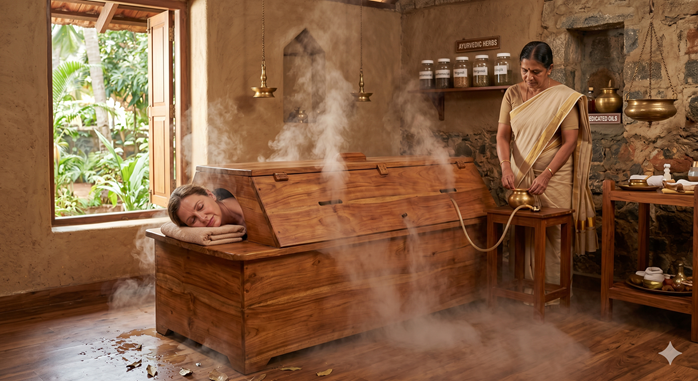
C) Peti Swedana (Herbal Steam Therapy) in the Management of Chemotherapy-Related Fatigue (Klama)
Peti Swedana (herbal steam therapy administered through a steam chamber) is a traditional Ayurvedic sudation therapy designed to induce gentle sweating and promote relaxation. As a Ayurvedic intervention, Peti Swedana can be beneficial in managing Chemotherapy-Related Fatigue (CRF), a common and often debilitating symptom experienced by cancer patients during and after chemotherapy.
Peti Swedana can help to alleviate symptoms associated with chemotherapy-related fatigue through several mechanisms:
1) Promotes Relaxation and Stress Reduction: The warmth generated during steam therapy helps to relax the body and mind, potentially reducing stress and emotional tension associated with cancer treatment.
2) Relieves Muscle Stiffness and Body Aches: Many patients undergoing chemotherapy experience musculoskeletal discomfort and do gentle steam therapy can help to reduce stiffness and improve physical comfort.
3) Supports Circulation: Heat-induced vasodilation can enhance peripheral circulation, promoting the delivery of nutrients and oxygen to tissues.
4) Improves Sense of Well-Being: The soothing effects of steam therapy can help to improve mood, reduced fatigue perception, and enhanced overall quality of life.
D) Pada Abhyanga (Therapeutic Foot Massage) in the Management of Chemotherapy-Related Fatigue (Klama)
Pada Abhyanga, the Ayurvedic practice of therapeutic foot massage using warm herbal oils, is a simple yet highly effective supportive therapy that may help alleviate symptoms associated with Chemotherapy-Related Fatigue (CRF). This traditional treatment is particularly valued for its calming effects on the nervous system, promotion of restful sleep, and enhancement of overall well-being.
Pada Abhyanga (Therapeutic Foot Massage) in the Management of Chemotherapy-Related Fatigue (Klama)
1) Promotes Deep Relaxation: Gentle massage of the feet with warm medicated oils helps calm the nervous system and reduce stress-related symptoms commonly experienced during cancer treatment.
2) Improves Sleep Quality: Sleep disturbances frequently worsen fatigue in cancer patients. Pada Abhyanga traditionally proves beneficial to encourage restorative sleep and relaxation.
3) Supports Nervous System Balance: Ayurveda considers the feet to contain important channels connected to the entire body. Regular Pada Abhyanga is believed to nourish and stabilize the nervous system, helping to combat fatigue and promote vitality.

Dr. Ravi Gupta: Best Integrative Ayurvedic Doctor for the Treatment of Breast Cancer in USA
For readers in the United States seeking an integrative approach to breast cancer care, Dr. Ravi Gupta, Ayurveda Cancer Consultant offers personalized Ayurvedic support designed to complement conventional cancer treatments. His approach focuses on improving quality of life, supporting overall well-being, managing treatment-related symptoms, and promoting holistic health through evidence-informed Ayurvedic principles. International patients can conveniently receive online consultations from anywhere in the USA.
Dr. Ravi Gupta, Ayurveda Cancer Consultant
📞 Call / WhatsApp: +91 98192 74611
📧 Email: cancerinayurveda@gmail.com
💻 Online Consultations Available for Patients Across the USA
To learn more or schedule a consultation, contact Dr. Ravi Gupta, Ayurveda Cancer Consultant today.