
Leukemia is a type of blood cancer that originates in the bone marrow. Bone marrow is a tissue that is responsible for production of blood cells and in leukemia, abnormal white blood cells is produced. This abnormal white blood cells grows uncontrollably and further fail to function normally. These unhealthy and abnormal leukemia cells crowd out healthy cells further leading to serious health concern.
Types of Leukemia
1) Acute Lymphoblastic Leukemia (ALL).
2) Acute Myeloid Leukemia (AML).
3) Chronic Lymphocytic Leukemia (CLL).
4) Chronic Myeloid Leukemia (CML).
About Manjistha (Rubia cordifolia)
Manjistha (Rubia cordifolia) is also commonly known as Indian Madder and is one of the most important blood purifying or raktha shodhak herbs mentioned in Ayurveda. Manjistha is been used since centuries for the management of skin disorders, inflammatory conditions and complex or chronic condition like cancer.
Ayurvedic Properties of Manjistha (Rubia cordifolia)
1) Rasa (Taste): Tikta (bitter), Kashaya (astringent), and Madhura (sweet).
2) Guna (Qualities): Guru (heavy), Ruksha (dry).
3) Virya (Potency): Ushna (hot).
4) Vipaka (Post-digestive effect): Madhura.
5) Dosha Action: It pacifies pitta and kapha, purifies vitiated rakta dhatu.
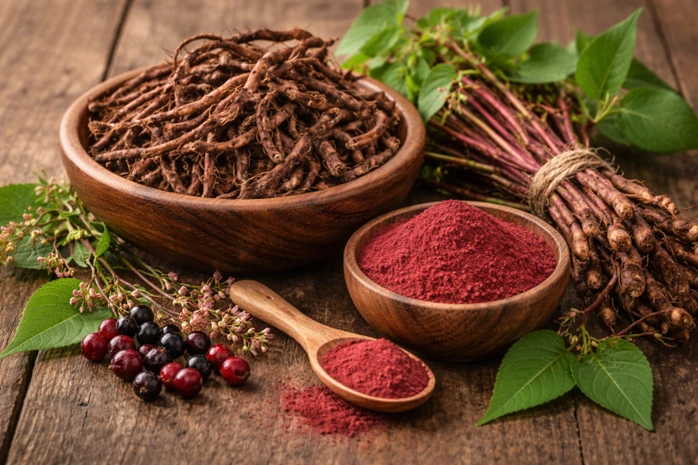
Key therapeutic benefit of Manjistha (Rubia cordifolia) in Leukemia
1) Raktha Shodhana (Blood Purification)
a) It helps to cleanse or purify the vitiated Raktha Dhatu.
b) It helps to cleanse toxins or Aam from the body.
c) It supports healthier hematological environment.
2) Support to Bone Marrow & Majja Dhatu
a) It supports Majja Dhatu balance.
b) It helps to improve quality of blood formation when used judiciously.
c) It is useful in post-chemotherapy marrow recovery phases.
3. Anti-Inflammatory Effect
a) It is well known fact that chronic systemic inflammation plays a role in leukemia progression and so manjistha helps to reduce inflammatory burden.
b) It supports reduction of bone pain and tissue discomfort.
4) Immune Modulation
a) It helps to regulate immune imbalance seen in leukemia.
b) It also supports immune resilience without overstimulation.
c) It aids in preventing recurrent infections when combined appropriately.
About Neem (Azadirachta indica)
Neem, known as Azadirachta indica, is one of the most powerful detoxifying, antimicrobial, and immune-modulating herbs in Ayurveda. It is widely known for its Raktha-Shodhak (Blood Purifying) properties and is extensively used in infection and chronic diseases like leukemia.
Ayurvedic Properties of Neem (Azadirachta indica)
a) Rasa (Taste): Tikta (bitter), Kashaya (astringent).
b) Guna (Qualities): Laghu (light), Ruksha (dry).
c) Virya (Potency): Sheeta (cooling).
d) Vipaka: Katu (pungent).
e) Dosha Action: Pacifies Pitta and Kapha, controls aggravated Rakta.
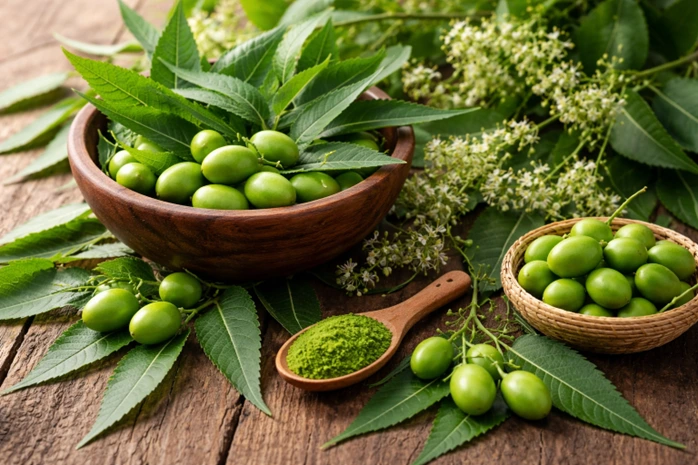
Key therapeutic benefit of Neem (Azadirachta indica) in Leukemia
1. Rakta Shodhana (Blood Purification)
a) It helps to cleanse vitiated Rakta Dhatu.
b) It reduces circulating toxins (Ama) that aggravate abnormal blood cell activity.
c) It supports healthier blood milieu.
2. Immune Modulation
a) It helps to regulate immune dysfunction seen in leukemia.
b) It supports immune surveillance without overstimulation.
c) It is useful during immunosuppressed states.
3. Anti-Inflammatory Action
a) It is well known fact that chronic systemic inflammation contributes to disease progression and so neem reduces inflammatory burden at tissue and cellular levels.
b) It helps to relieve fever, burning sensation, and systemic toxicity.
4. Liver Detoxification & Drug Metabolism Support
a) It supports hepatic function during long-term chemotherapy or targeted therapy.
b) It aids detox pathways and improves drug tolerance.
Neem Ghanavati in the management of Leukemia
Neem Ghnavati Tablet is an Ayurvedic formulation prepared from the solid extract or ghana of Neem (Azadirachta indica) leaves. Fresh Neem leaves are boiled with water to prepare a decoction (Kwatha), which is then filtered and slowly heated on a low flame until it thickens into a semi-solid mass. This extract is cooled, rolled into small tablets (usually 250–500 mg), and shade-dried before storage in airtight containers.
Modern research has identified several bioactive compounds in Neem (primarily Nimbolide, Azadirachtin, and Gedunin) that exert specific anti-leukemic effects.
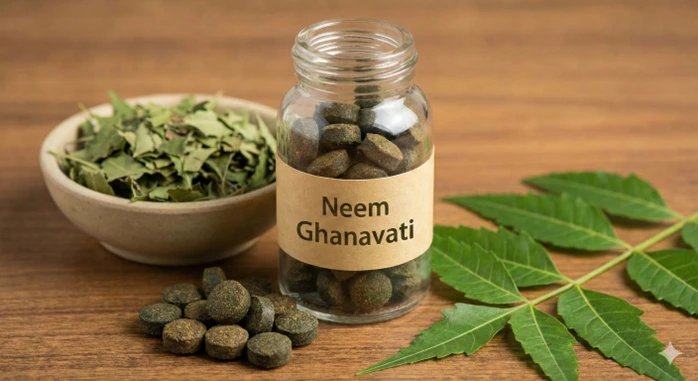
Benefits of Neem Ghanavati in the management of Leukemia
1) Induction of Apoptosis: Research, especially concerning Chronic Lymphocytic Leukemia (CLL) B-cells, has demonstrated that Neem Leaf Extract (NLE) induces apoptosis by activating the intrinsic apoptotic pathway. It causes PARP and Caspase-3 to break apart, which kills cancerous cells.
2) Downregulation of Bcl-2: Neem extracts have been observed to inhibit the Bcl-2 protein, which is an anti-apoptotic protein often overexpressed in leukemia cells that prevents them from dying naturally.
3) Cell Cycle Arrest: It disrupts the cell cycle progression of cancer cells, preventing rapid proliferation.
4) Clinical Application & Dosage: Formulation like Ghanavati is preferred over Churna (powder) in oncology because it offers a higher concentration of active principles in a smaller dosage form, improving patient compliance.
Manjistha Ghanavati in the management of Leukemia
Manjistha Ghanavati is prepared by boiling coarse Manjistha root powder in water (1:8 or 1:16 ratio) to create a standard Kwatha, reducing the liquid to one-eighth of its original volume. The filtered decoction is then reheated over mild fire (Mandagni) with constant stirring until it thickens into a viscous, semi-solid Ghana (extract).
Once the mass achieves a non-sticky consistency, a small amount of fine Manjistha powder is added as a binder. The mixture is finally rolled into 250 mg or 500 mg tablets and dried to yield a potent, shelf-stable formulation.
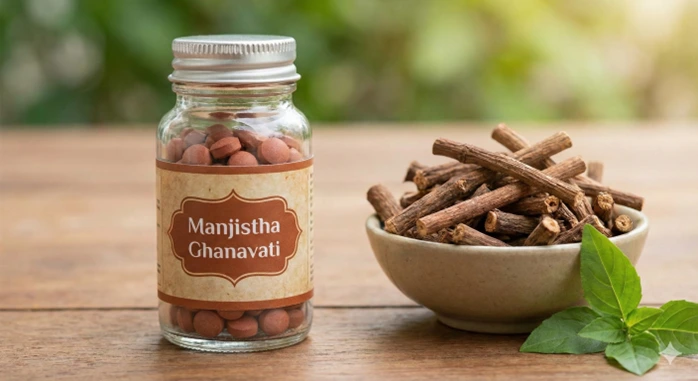
Benefits of Manjistha Ghanavati in the management of Leukemia
1) Anthraquinones (Rubiadin & Purpurin): These compounds exert antioxidant and anti-proliferative effects. Rubiadin, in particular, has been shown to inhibit DNA synthesis in leukemia cells.
2) Anti-Angiogenesis: Manjistha restricts the formation of new blood vessels that tumors need to grow and effectively starve the malignant mass.
3) Bicyclic Hexapeptides (RA-V & RA-VII): Manjistha contains certain anti-tumor peptides like Bicyclic Hexapeptides (RA-V & RA-VII) and this inhibit protein synthesis in cancer cells and induce apoptosis (cell death) effectively in drug-resistant tumor lines.
Ayurvedic Treatment for Leukemia
Consult Dr. Ravi Gupta,
Dr. Ravi Gupta, Ayurveda Cancer Consultant,
specialized in holistic Ayurvedic management of Leukemia through herbal medicines, Panchakarma detoxification, Rasayana therapy, diet planning, and lifestyle modification.
🏥Clinics Available At: Mumbai | Pune | Surat | Ahmedabad | Vadodara (Baroda) | Rajkot | Jaipur | Varanasi
📞 Call / WhatsApp: +91-9819274611
🌐 Website: www.cancerinayurveda.com
📌 Early consultation is recommended for better outcomes.
📌 Online & in-person consultations available.