
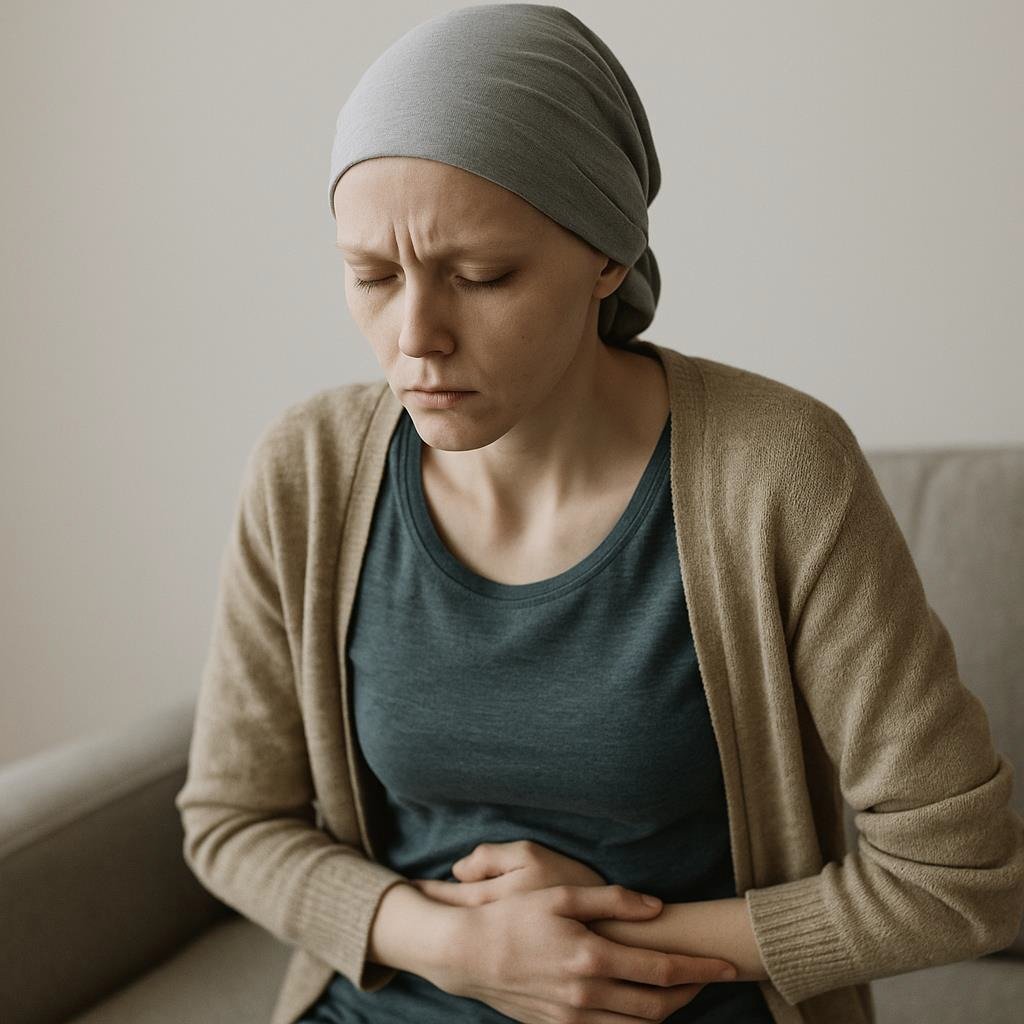
Leukemia is a type of blood cancer that originates in the bone marrow, where blood cells are formed. In leukemia due to certain genetic mutations the bone marrow starts producing abnormal white blood cells uncontrollably, and these white blood cells do not function properly. Because of this, they crowd out healthy blood cells like red blood cells (RBCs), normal white blood cells (WBCs), and platelets. This weakens the body’s ability to fight infection, carry oxygen, and stop bleeding.
Types of Leukemia:
Leukemia is mainly classified into four major types:
- A) Acute Lymphocytic Leukemia (ALL).
- B) Acute Myeloid Leukemia (AML).
- C) Chronic Lymphocytic Leukemia (CLL).
- D) Chronic Myeloid Leukemia (CML).
Acute: Develops fast and requires early treatment.
Chronic: Develops slowly and may not show symptoms early.
Side-effects of Chemotherapy in Leukemia
Chemotherapy is a common and effective way to treat leukemia, but it also affects some healthy cells in the body because it targets cells that grow quickly. This can cause different side effects, which can be different depending on the type of chemo, the dose, the patient’s strength, and the condition of the blood report.
1. Bone Marrow Suppression (Most Important)
Chemotherapy can reduce the formation of normal blood cells.
A) Low WBC count: It can lead to more infections.
B) Low RBC count: It can lead to fatigue, weakness, and breathlessness.
C) Low Platelets: It can lead to easy bruising & bleeding.
2. Digestive System Effects
Because chemo affects cells of the stomach and intestines:
A) Nausea & vomiting.
B) Loss of appetite.
C) Mouth ulcers.
D) Altered taste.
E) Diarrhea or constipation.
3. Hair & Skin Effects
A) Hair fall (temporary).
B) Dry, itchy skin.
C) Darkening of nails.
D) Rashes may occur.
4. Fatigue
One of the most common side effects
A) Even daily activities may feel exhausting.
B) Rest & nutrition become important.
6. Fertility & Hormonal Impact
In some patients
A) Irregular menstruation or temporary infertility.
B) Hormonal imbalance.
Not everyone experiences this — age and drug type matter.
How to treat Nausea & Vomiting through Ayurveda caused due to chemotherapy in Leukemia or Blood Cancer
Chemotherapy is one of the most important treatment modalities for leukemia but in can make you feel sick and affect both the brain and the digestive system. The drugs hurt cells in the stomach lining that divide quickly. This makes serotonin release, which activates the vagus nerve and the vomiting center. Chemotherapy drugs that are in the blood also activate the Chemoreceptor Trigger Zone (CTZ) in the brain, which makes you throw up.
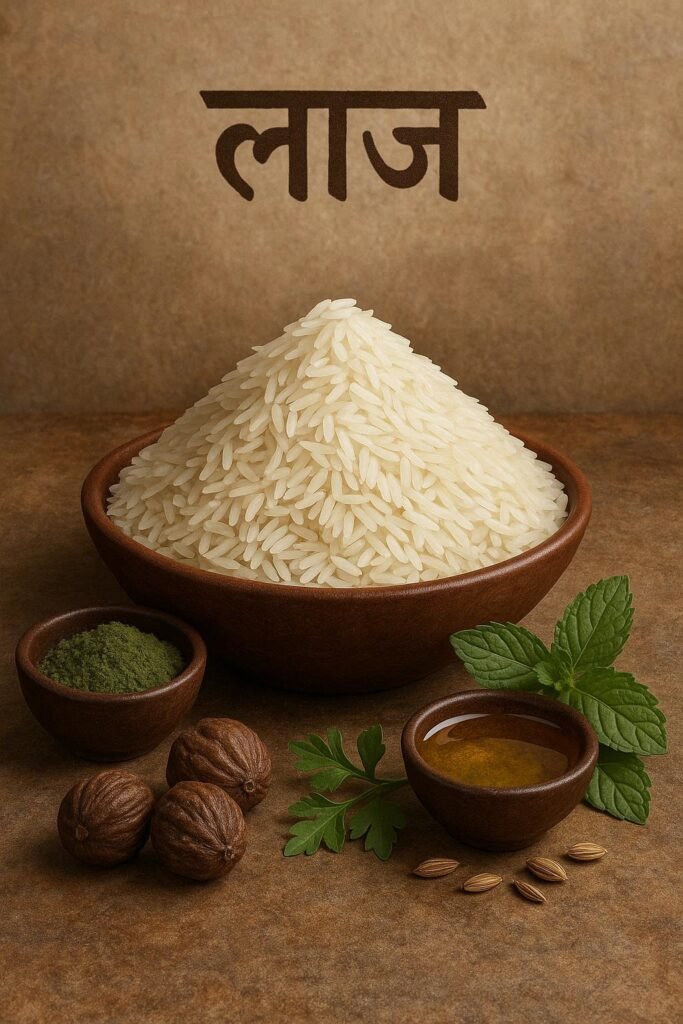
A) Laja (Puffed Rice) Peya in Nausea and Vomiting due to Chemotherapy
Laja Peya is a light and easily digestible Ayurvedic preparation made from Laja (puffed rice) boiled and taken in liquid form. It is one of the simplest forms of Peya (thin gruel) and is particularly useful in conditions where digestion is weak and appetite is affected. It is also easy to digest and provide appropriate nutrition of leukemia patients.
Key Features of Laja Peya
1) It is prepared from puffed rice (murmura / laja).
2) It is light to digest (Laghu) and non-irritating in nature.
3) It helps to settle nausea, improves digestion & reduces dehydration.
4) It provides mild nutrition and strength without heaviness
Simple Method of Preparation
1) Take a handful of Laja (puffed rice).
2) Wash lightly and boil in water for 5–7 minutes.
3) Filter and consume the watery portion (can add a pinch of Saindhav salt if needed).
B) Dhaniya and Jeera Phant in Nausea and Vomiting due to Chemotherapy
Dhaniya–Jeera Phant is a classical Ayurvedic drink prepared by steeping Coriander (Dhaniya) and Cumin (Jeera) seeds in boiled or lukewarm water. Unlike a decoction (Kwath), it is not boiled together for long, which preserves its subtle volatile oils, making it light, digestive and cooling. It is especially beneficial in nausea, vomiting, low appetite, acidity, burning sensation and weak digestion — commonly seen in patients undergoing chemotherapy for leukemia.
Method of Preparation
1) Take ½–1 tsp Dhaniya + ½ tsp Jeera.
2) Crush lightly for better release of oils.
3) Add to 150–200 ml freshly boiled water.
4) Cover and let it stand (infuse) for 10–15 minutes.
5) Strain and sip warm or at room temperature.
Clinical Uses
1) It proves beneficial in nausea, vomiting, and low appetite in leukemia patient.
2) It proves beneficial in burning sensation, acidity, gastritis.
3) It is supportive care in leukemia chemotherapy when gut sensitivity is high.
How to treat Hairfall through Ayurveda caused due to chemotherapy in Leukemia or Blood Cancer
Alopecia is one of the most common complain that a cancer patient faces post-initiation of chemotherapy and typically begins 2-4 weeks after chemotherapy, It advances progressively throughout the treatment duration. It can impact not just scalp hair but also eyebrows, eyelashes, facial hair, underarm hair, and body hair. The intensity differs across individuals.
Chemotherapy-induced hair loss is often transient and typically, hair commences regrowth within 6 to 12 weeks following the conclusion of therapy. Gentle scalp care, nutritional maintenance, and the use of stress-reducing activities can facilitate healthy regrowth.
A) Blood Letting (Raktamokshana) through leech over the scalp for chemotherapy related hair fall.
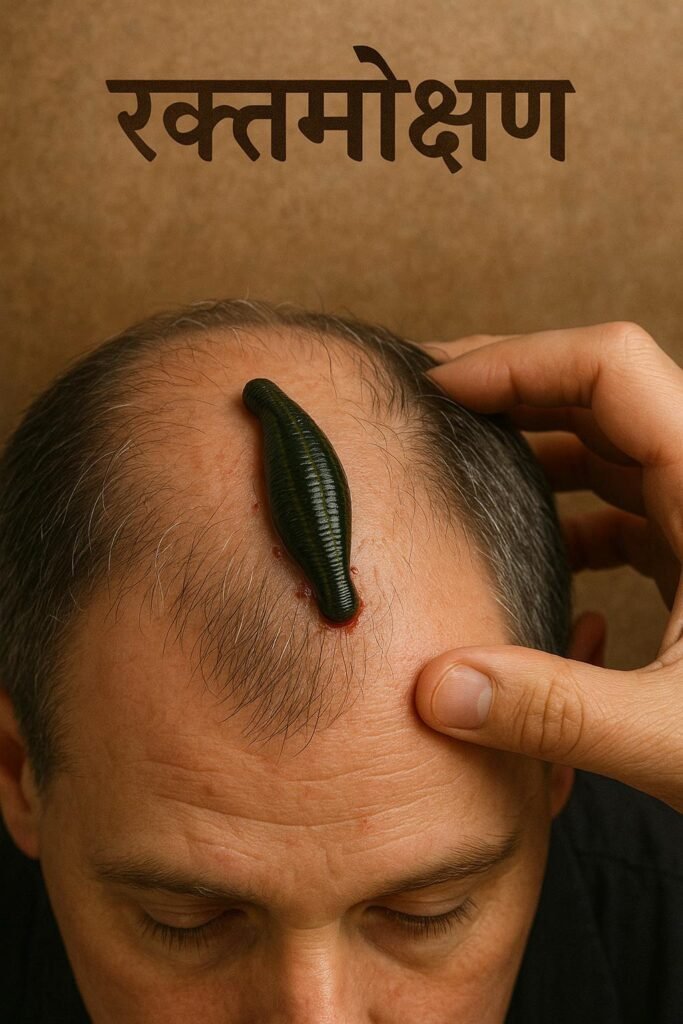
Raktamokshana, or therapeutic bloodletting, is one of the important Shodhana procedures mentioned in Ayurveda for removing vitiated blood and balancing aggravated doshas—especially Pitta and Rakta, which play a key role in scalp inflammation, burning sensation, itching, and weakening of hair follicles. Leech therapy (Jalaukavacharana) helps improve microcirculation, reduce inflammation, and clean the local tissues when applied carefully to the scalp. This makes the area healthier for hair to grow back.
Chemotherapy often causes hair loss because it damages hair follicle cells that are dividing quickly and raises oxidative stress and Pitta in the scalp. Leech therapy can be very helpful for these kinds of patients. Leeches gently pull out stagnant, unhealthy blood while also delivering biologically active substances like hirudin and anti-inflammatory peptides that improve blood flow, help follicles heal, and feed the scalp tissues. This makes the therapy especially helpful when hair follicles are weak, sensitive, or having trouble growing back after chemotherapy. This is to be done under guidance of trained medical professional only.
B) Abrus precatorius (Gunja) Lepa over the scalp for chemotherapy related hair fall.
Gunja (Abrus precatorius) is a well-known Ayurvedic herb that is known for its strong Keshya (hair-supporting), Rakta-shodhaka (blood-purifying), and Kandughna (anti-inflammatory) effects. When applied to the scalp as a Lepa (herbal paste), it helps wake up hair follicles that are sleeping, improve microcirculation, and reduce scalp inflammation, all of which are common problems during chemotherapy. It is well known fact that chemotherapy harms hair-matrix cells that divide quickly and throws off the balance of Pitta on the scalp. Gunja (Abrus precatorius) is well known for its follicle-stimulating effects make it a unique therapy for helping hair grow back after chemotherapy.
Gunja seeds is purified of all the natural toxins through shodhana prakriya mentioned in Ayurveda. follicle-stimulating effects make it a unique therapy for helping hair grow back after chemotherapy. The medicated paste helps to improve blood flow to the hair roots, lower oxidative stress, and get hair follicles that have been damaged by cytotoxic drugs to start working again.
Because Gunja is a strong herb, it needs to be purified very carefully and under the watchful eye of an expert. Improperly purified seeds can cause irritation, so at Cancer in Ayurveda under Dr. Ravi Gupta, Ayurveda Cancer Consultant, Gunja Lepa is only used after looking at the patient’s chemotherapy phase, blood counts, and scalp sensitivity.
How to treat bone marrow suppression through Ayurveda caused due to chemotherapy in Leukemia or Blood Cancer
Bone marrow suppression (also called myelosuppression) means that the bone marrow slows down or temporarily stops producing blood cells.
The bone marrow normally makes:
A) Red Blood Cells (RBCs) – carry oxygen.
B) White Blood Cells (WBCs) – fight infection.
C) Platelets – help blood clot.
Chemotherapy drugs used in AML, CML, ALL, lymphomas, and other blood cancers target rapidly dividing cancer cells. But bone marrow cells also divide rapidly, so they are affected as well — leading to low blood counts.
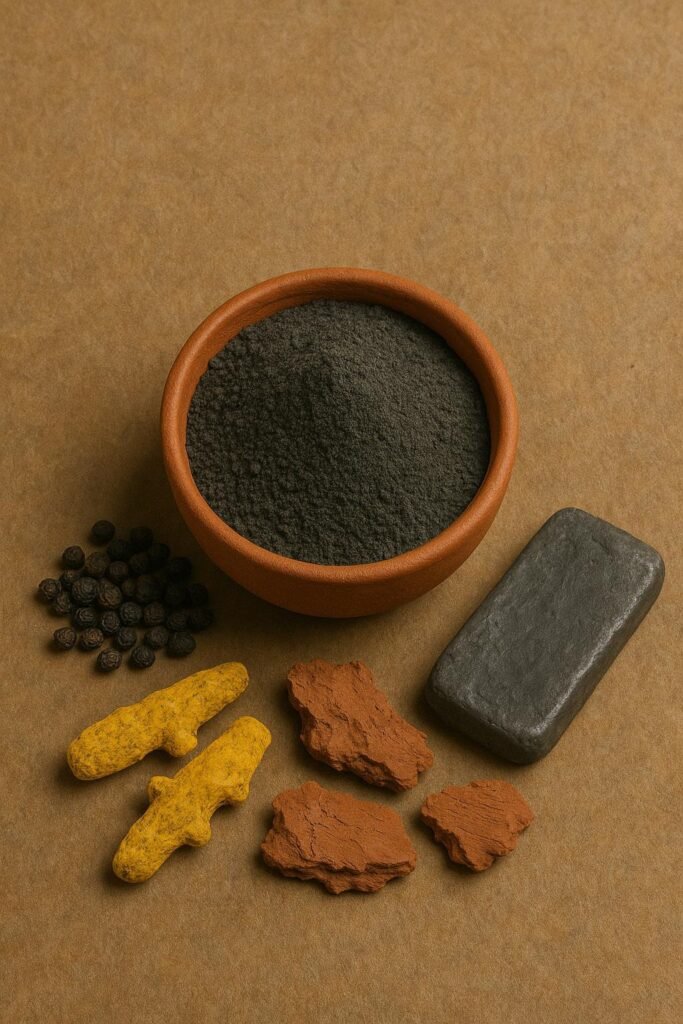
A) Rajat Yuktha Tapyadi Loha in Low Hemoglobulin Count or Depressed Bone Marrow due to chemotherapy
ताप्याद्रिजतुरूप्यायोमलाः पञ्चपलाः पृथक्| चित्रकत्रिफलाव्योषविडङ्गैः पलिकैः सह||७८||
शर्कराष्टपलोन्मिश्राश्चूर्णिता मधुनाऽऽप्लुताः| अभ्यस्यास्त्वक्षमात्रा हि जीर्णे हितमिताशिना||७९||
कुलत्थकाकमाच्यादिकपोतपरिहारिणा|८०|
Charak Samhita 27/78-80
Tapyadi yoga – Combine five pala each of tapya, shilajatu, silver, and mandura with one pala each of chitraka, haritaki, bibhitaka, amalaki, sunthi, pippali, maricha, and vidanga; then add eight pala of sugar. The patient should consistently consume this dish at a dosage of one karsha, accompanied by a sufficient quantity of honey.
Benefits of Tapyadi Loha
1) It helps to strengthen Rakta–Majja pathway.
2) It helps to support recovery of erythropoiesis (RBC formation).
3) It enhances tissue nutrition through Rasayana effect.
4) It helps to prevent recurrent infections due to low WBCs.
B) Raktha Basti in Low Hemoglobulin Count or Depressed Bone Marrow due to chemotherapy
Rakta Basti is a specific Ayurvedic medicinal technique outlined in several traditional and modern Ayurvedic texts, including the rectal administration of pure blood—typically from goats—as a sort of Basti (enema treatment). This therapy is recommended for severe anemia (Rakta Kshaya), blood deficiency illnesses, and genetic problems including sickle cell anemia and thalassemia, providing a traditional alternative to blood transfusions in specific situations.
Benefit of Raktha Basti
- Facilitating Hematopoiesis (Rakta Dhatu Vriddhi)
Ayurveda posits that the introduction of blood into the colon activates the body’s inherent ability to repair red blood cells.
- Supplying Natural Iron and Nutrients for Hemoglobin Production
Research published in the World Journal of Pharmaceutical & Life Sciences indicates that the rectal mucosa is capable of absorbing iron and certain bioactive constituents from the introduced blood.
- Serving as an Ayurvedic Substitute When Transfusion Is Unfeasible
In rural or resource-constrained environments, Rakta Basti has traditionally been employed when blood transfusions are inaccessible or postponed.
- Facilitating Bone Marrow Recuperation
Recent Ayurvedic research indicate enhanced hemoglobin levels and clinical strength following many Rakta Basti treatments in individuals experiencing bone marrow depression.