

Blood cancers are generally grouped into three categories based on which cells they affect:
1) Leukemia: The bone marrow makes too many abnormal white blood cells that can’t fight infections and “crowd out” healthy cells.
2) Lymphoma: Affects lymphocytes, which are a type of white blood cell. These abnormal cells collect in the lymph nodes and other tissues, making the immune system weaker.
3) Myeloma: Affects the plasma cells that make antibodies. This stops your body from making antibodies normally, which makes you more likely to get sick.
About Curcumin
Turmeric (Curcuma longa) is a golden-yellow spice that has been used in Indian cooking and traditional medicine for hundreds of years. Curcumin is the main bioactive compound in turmeric and is well known for its strong anti-inflammatory and antioxidant effects, which help keep the body safe from oxidative stress and chronic inflammation. Curcumin is good for your health in general and can help with a lot of long-term problems because of these effects.
From a scientific standpoint, curcumin has undergone extensive investigation regarding its immunomodulatory, antimicrobial, and cellular regulatory properties. Studies indicate that curcumin may assist in modulating aberrant cell proliferation, facilitating apoptosis (programmed cell death), and diminishing inflammatory pathways frequently hyperactive in cancer and other degenerative conditions.
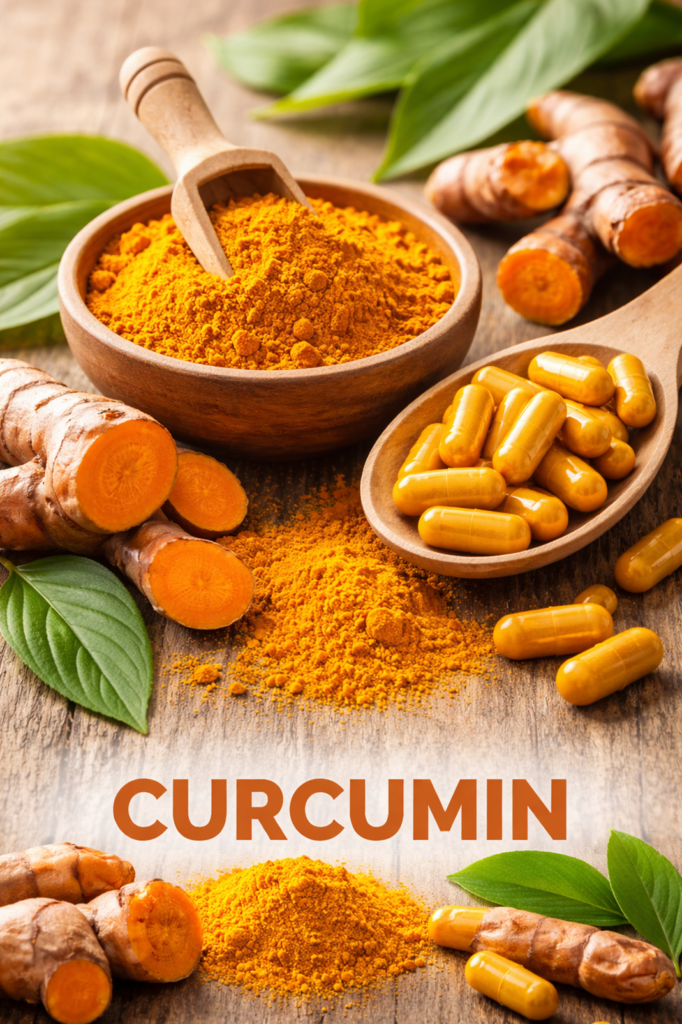
Ayurveda values curcumin for its Rakta-shodhana (blood-purifying), Shothahara (anti-inflammatory), and Krimighna (antimicrobial) effects. It is traditionally prescribed in certain amounts and combinations based on the person’s constitution (Prakriti), the state of their disease, and the strength of their digestion (Agni).
Benefits of Curcumin in Blood Cancer, Acute Myeloid Leukemia (AML), and or Chronic Myeloid Leukemia (CML)
1) Benefits of Curcumin in Acute Myeloid Leukemia (AML)
A) Anti-Proliferative: Curcumin targets the aggressive of fast-growing nature of the cancerous cells in AML.
B) Inactivation of AKT Signalling: Recent studies show curcumin inactivates the AKT signalling pathway, that is a key driver of AML cell survival and proliferation.
C) Epigenetic Regulation: It has been demonstrated to downregulate DNA methyltransferase 1, an enzyme that facilitates the “silencing” of tumor suppressor genes in cancer cells.
D) Chemosensitization: Curcumin may make AML cells more sensitive to common drugs like Cytarabine and Azacitidine, which means that lower doses of these drugs will work better.
2) Benefits of Curcumin in Chronic Myeloid Leukemia (CML)
A) Targeting BCR-ABL: Curcumin has been shown to lower the level of the – protein (BCR-ABL), which is a hallmark of CML.
B) Overcoming Resistance: It can prove beneficial in overcoming resistance to Tyrosine Kinase Inhibitors (TKIs) like Imatinib (Gleevec). When used together, curcumin and Imatinib have shown synergistic effects in killing resistant CML stem cells.
C) Exosomal Modulation: Studies show that curcumin alters the makeup of “exosomes,” which are bubbles that cells release. This stops CML cells from promoting angiogenesis, which promoted the growth of new blood vessels that helps the tumor grow.
3) Other Important Benefits of Curcumin in Blood Cancer, AML & CML
A) Molecular pathway modulation: It down-regulates NF-κB, STAT3, and BCR-ABL–related signaling (especially relevant in CML), which are involved in disease progression.
B) Anti-inflammatory effect: Curcumin reduces chronic inflammation commonly seen in blood cancer patients and during chemotherapy.
C) Antioxidant protection: Curcumin neutralizes free radicals and lowers oxidative stress, protecting healthy cells and tissues.
D) Rakta-shodhaka (blood-purifying) property: It supports purification and balance of Rakta Dhatu affected in leukemia.
E) Immune modulation: Curcumin helps to regulate immune responses and supports T-cell and macrophage function without overstimulation.
F) Rasayana effect: Curcumin acts as a rejuvenative agent, supporting strength, vitality, and overall quality of life.
The Core Problems with Bioavailability of Curcumin and How to Increase its Absorption
The low bioavailability of curcumin is the single greatest obstacle to its use in medical treatments like leukemia. Essentially, while curcumin is a “superstar” in a petri dish, the human body is remarkably efficient at getting rid of it before it can reach the bloodstream.
A) Hydrophobicity (Water Insolubility): It is well known fact and observation that curcumin does not dissolve well in water. Since our digestive tract and blood are water-based, most of the curcumin powder simply passes through the system without being absorbed.
B) Rapid Metabolism (The “First-Pass” Effect): The liver and intestines see curcumin as something that shouldn’t be there and quickly turn it into water-soluble metabolites, such as curcumin glucuronides. These metabolites are not active in the body and are quickly removed.
C) Instability: Curcumin is not stable chemically at the small intestine’s neutral or alkaline pH levels, which means it breaks down before it can be absorbed.
Modalities to increase Absorption of Curcumin
Ayurveda science has developed several modalities facilitates the body into absorbing and keeping curcumin.
A) The “Adjuvant” Method (Piperine):
It is well known fact that most efficient way to boost bioavailability of curcumin is to take with Piperine (an extract of black pepper). Piperine stops the liver from breaking down curcumin by stopping the metabolic pathway known as glucuronidation. Studies show that taking 20mg of piperine with 2g of curcumin can make the body absorb them 2,000% better.
B. Liposomal & Phospholipid Formulations (Phytosomes)
It is a well-known fact that curcumin dissolves in fat, “wrapping” it in fat helps it get through the intestinal wall. Also, curcumin is linked to phosphatidylcholine, which is a major part of cell membranes. This looks like a healthy fat, which means the body can use it as food. Curcumin is put inside tiny fat bubbles that keep it safe from stomach acid and send it straight to cells.
Haridra Khanda Yoga: An Ayurvedic Formulation Rich in Curcumin with Enhanced Bioavailability
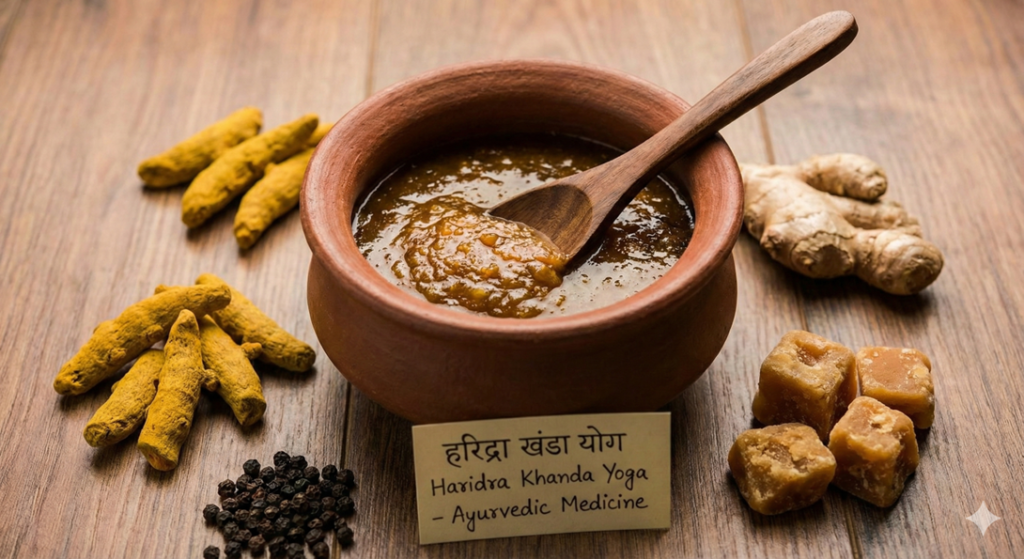
Haridra Khana which also known as Haridrakhandam is a classical Ayurvedic granular formulation where Haridra (Turmeric) is the primary ingredient. It is traditionally classified as a Rasayana (rejuvenative) and is most famous for its potent anti-allergic and blood-purifying properties.
In the context of blood health and modern research, it is often discussed because it addresses the very issue you mentioned earlier: the bioavailability of curcumin.
1. Composition and “Built-in” Bioavailability
A) Improved formulation: Haridra Khanda is a traditional Ayurvedic formulation that is meant to make curcumin more available and effective as a medicine than plain turmeric powder.
B) Lipid-based delivery: Cow ghee and milk are used to process turmeric, which creates a fat medium that helps the lymphatic system and systemic circulation absorb curcumin, which is fat-soluble.
C) Natural bio-enhancers (Trikatu): Black pepper (Maricha), long pepper (Pippali), and ginger (Shunthi) make curcumin work better. Piperine from black pepper slows down the metabolism in the liver, making it more available in the body.
2. Potential in Blood Cancer and Leukemia
A) Antitumor activity: Research indicates that the curcumin in Haridra Khanda can trigger apoptosis (programmed cell death) in leukemic cell lines while exerting negligible cytotoxic effects on healthy cells.
B) Inhibition of survival pathways: Curcumin has been demonstrated to inhibit hyperactive cellular survival and proliferation signaling pathways associated with hematologic malignancies, consequently restraining tumor growth and resistance mechanisms.
C) Supportive Care (Adjuvant): Haridra Khanda may help lessen the side effects of chemotherapy, like nausea and fatigue. It may also make cancer cells more sensitive to standard anticancer treatments.
Dr. Ravi Gupta, Best Ayurveda Doctor for the treatment of Blood Cancer, and or CML and AML
Dr. Ravi Gupta, Ayurveda Cancer Consultant is a highly experienced and reputed Ayurvedic oncology specialist known for his holistic approach to managing blood cancers such as Acute Myeloid Leukemia (AML) and Chronic Myeloid Leukemia (CML).
He integrates classical Ayurvedic principles with personalized care to support immunity, improve quality of life, and manage symptoms in patients undergoing cancer treatment. His protocols include herbal medicines, Panchakarma detoxification, diet & lifestyle adjustments, and Rasayana therapy tailored to each patient’s needs.
Contact & Clinic Details
Clinic: Mumbai | Pune | Surat | Ahmedabad | Vadodara (Baroda) | Rajkot | Jaipur | Varanasi
📞 Call/WhatsApp: +91-9819274611
🌐 Website: www.cancerinayurveda.com