

Leukemia is a blood cancer that starts in the lymphatic system and bone marrow. It happens when the body makes too many strange white blood cells. These leukemia cells don’t die on their own like healthy blood cells do. Instead, they take up space that normal red blood cells and platelets need, making it harder for the body to fight infections and move oxygen.
The 4 Main Types of Leukemia
Doctors classify leukemia based on the speed of progression (acute vs. chronic) and the type of cell involved (lymphocytic vs. myeloid):
1) Acute Lymphocytic Leukemia (ALL): The most common form of childhood leukemia.
2) Acute Myeloid Leukemia (AML): A rapidly progressing cancer common in both adults and children.
3) Chronic Lymphocytic Leukemia (CLL): A slow-growing cancer that primarily affects older adults.
4) Chronic Myeloid Leukemia (CML): A type that typically affects adults and may remain stable for years before progressing.
How Common is Low Platelet Count in Blood Cancer?
Thrombocytopenia (low platelet count) is one of the most frequent complications in blood cancer patients. Research indicates that approximately 30% to 50% of patients with hematologic malignancies (blood cancers) experience low platelets at some point during their diagnosis or treatment.
The incidence varies significantly by the specific type of cancer:
1) Acute Leukemias (AML & ALL):
Incidence: Very High (>90% during treatment).
Most patients with Acute Myeloid Leukemia (AML) and Acute Lymphocytic Leukemia (ALL) have low platelets at diagnosis because the leukemia cells crowd the bone marrow, preventing platelet production. Nearly all patients experience it during chemotherapy.
2) Chronic Myeloid Leukemia (CML):
Incidence: Generally, platelet is low at diagnosis; can be high during treatment.
Interestingly, CML patients often have high platelet counts (thrombocytosis) in the early chronic phase. Low platelets typically only occur during the advanced “blast phase” or as a side effect of medication (e.g., Imatinib).
3) Chronic Lymphocytic Leukemia (CLL):
Incidence: It is moderate (~10-15% in early stages).
People with CLL often have low platelet counts because their immune system mistakenly attacks platelets instead of just crowding the bone marrow.
About Tinospora Cordifolia (Guduchi or Giloy)
Tinospora Cordifolia, most commonly known as Giloy (Hindi) or Guduchi (Sanskrit), is one of the most revered herbs in Ayurvedic medicine. It is often called “Amrita” (the root of immortality) due to its profound ability to revive the body and boost the immune system.
Dr. Ravi Gupta, an Ayurveda Cancer Consultant, uses Guduchi as an important part of holistic and patient-specific Ayurvedic protocols, especially for chronic diseases and cancer supportive care. These protocols focus on boosting immunity, detoxifying the body, and Rasayana therapy to improve tolerance and outcomes.
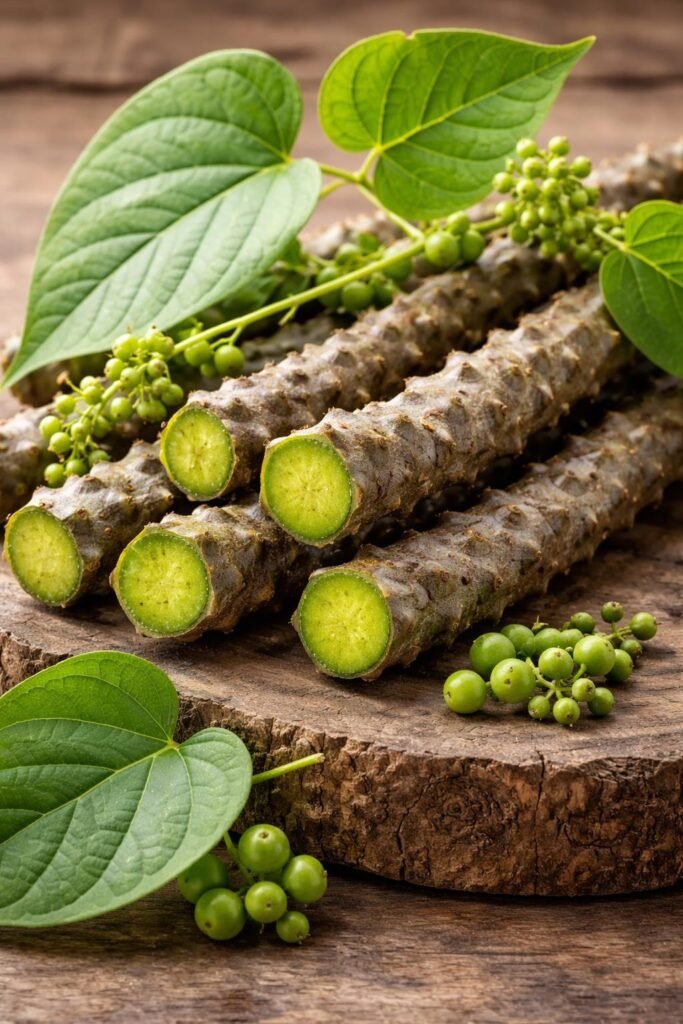
How Does Giloy (Tinospora cordifolia) Support Platelet Recovery in Blood Cancer, CML, and AML?
Low platelet count (thrombocytopenia) is a prevalent and significant issue in blood cancers, including CML (Chronic Myeloid Leukemia) and AML (Acute Myeloid Leukemia), arising either from the disease itself or as a consequence of chemotherapy. From an Ayurvedic point of view, Giloy (Tinospora cordifolia) is a useful supplement for improving platelet health and overall strength.
1) Giloy supports Bone Marrow Function (Majja Dhatu)
A) It helps to nourish and protect bone marrow.
B) It helps to support healthy hematopoiesis (formation of blood components).
C) It helps to improve tolerance to chemotherapy-induced marrow suppression.
2) Immunomodulatory Action of Giloy (Tinospora cordifolia)
A) Giloy is renowned for enhancing Vyadhikshamatva (immunity).
B) It helps to regulate abnormal immune responses seen in leukemia.
C) It reduces infection risk during low platelet and low count phases.
3) Giloy (Tinospora cordifolia) protects Platelets from Destruction
A) It reduces premature platelet destruction.
B) It helps to support platelet survival in circulation.
C) It also improves overall blood quality (rakta-prasadana).
4) Giloy (Tinospora cordifolia) improves Appetite, Digestion & Nutrient Absorption
A) It supports healthy digestion (Agni) that is essential for tissue regeneration.
B) It enhances absorption of nutrients needed for blood formation.
C) It reduces chemotherapy-related fever, weakness, and fatigue.
Shanshamni Vati in in Blood Cancer, CML, and AML
Shanshamni Vati is a traditional Ayurvedic herbal formulation primarily known for its antipyretic (fever-reducing) and immunomodulatory (immunity-boosting) properties. It is widely used to manage chronic fevers, boost the body’s defense mechanisms, and alleviate inflammation. The primary ingredient is Giloy (scientific name: Tinospora cordifolia), also known as Guduchi.