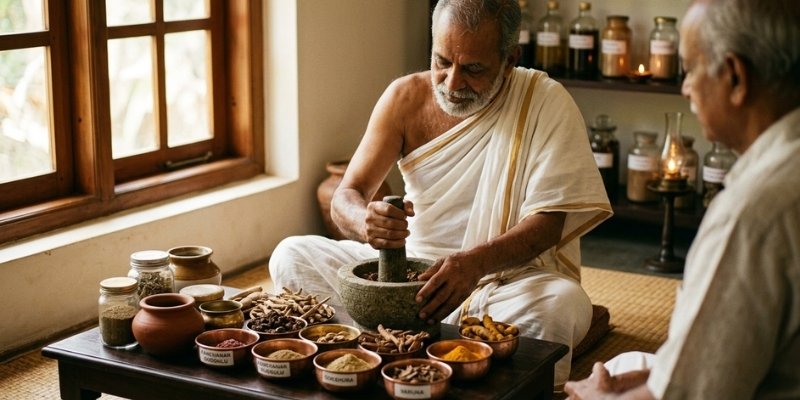
What is Ayurveda?
Ayurveda is an ancient system of Indian Medicine and has originated in India 3000 years ago. It is a well-known fact that health and mental wellness of an individual relies over a delicate balance of mind, body, and spiritual aspect. Ayurveda is the only science of medicine that take spiritual aspect of an individual into consideration. Further is mentioned some key and important aspects of Ayurveda:
1) Doshas: As per Ayurveda, an individual is governed three primary doshas (Vata, Pitta, and Kapha). Doshas governs the physical and mental aspect of an individual. Every individual is unique in terms of combination of doshas and this unique combination of doshas determines ‘Prakriti’ of an individual.
2)Herbal medicine: In Ayurveda, different herbs and rasa-aushadhis can be used in the treatment of prostate cancer.
3) Ayurvedic Diet and Nutrition: Ayurveda recommends different dietary and nutrition related recommendations that proves beneficial in prostate cancer patients.
4) PanchakarmaAyurveda recommends Panchakarma Therapy to prostate cancer patients and is one of the most important detoxifying therapies mentioned in Ayurveda.
5)Yoga and Meditation: Ayurveda recommends different yogic postures, breathing exercises, and meditation techniques that proves extremely beneficial in prostate cancer patient.
What is Prostate?
Prostate is a small and walnut shaped gland that is an important part of male reproductive system. Prostate gland plays an important role in reproduction and urinary functions. Prostate gland produces semen that proves as a medium of transport for the sperm and further also provides nourishment to the sperm. During ejaculation muscles in the prostate facilitates in pushing the semen through the urethra.
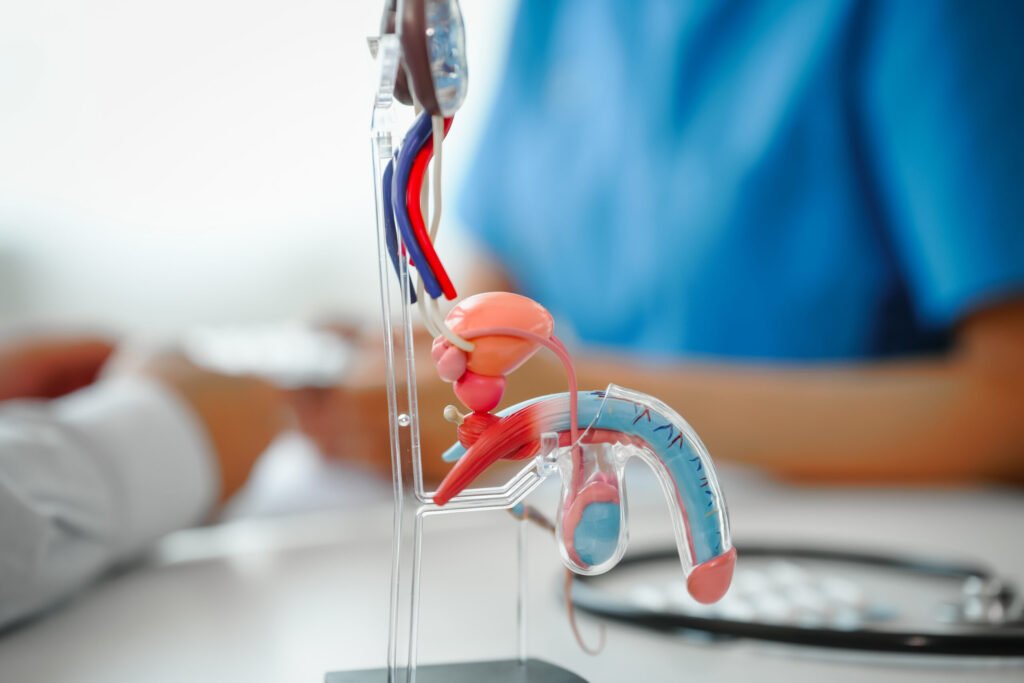
Prostate lies below the bladder and encircles the urethra. Normally the prostate gland enlarges as the men’s age increases and periodic screening is mandated at advanced ages. Regular screening after the age of 60 years proves beneficial in earlier detection of prostate cancer and at a treatable stage. Mostly enlarged prostate also can also be due to benign prostatic hyperplasia (BPH). Benign prostatic hyperplasia (BPH) is a benign and a non-cancerous growth of prostate.
What is Prostate Cancer?
Prostate Cancer is uncontrolled and abnormal growth of cells of the prostate gland. Prostate Cancer is one of the most common cancer among men’s and often grows slowly. But one of the most important aspect of prostate cancer is that it is effectively treatable if diagnosed at earlier stages so periodic evaluation is mandated.

Prostate Cancer can be evident by difficulty in micturition and blood in the urine or the semen. Prostate Cancer can also cause erectile dysfunction or pain in the lower back and hips. Prostate Cancer is mostly evident at advances stages and is generally asymptomatic at early stages.
Stages of Prostate Cancer
The stages of prostate cancer are:
1) Early-stage (localized) Prostate Cancer: Early stage prostate cancer is evident when cancer is confined to the prostate gland and has not spread to other parts of the body. This is the most treatable stage of the prostate cancer
2) Locally advanced Prostate Cancer: Locally advanced Prostate Cancer is evidenced when the cancer has spread outside the prostate but to nearby tissues. Locally advanced Prostate Cancer is difficult to treat.
3) Advanced-stage Prostate Cancer: Advanced-stage Prostate Cancer is stage in which prostate cancer cells has spread to distant parts of the body and has a poor prognosis.
Types of Prostate Cancer
Prostate Cancer is a type of cancer that primarily originate in the prostate gland and is subdivided based on the types of the cells from which the cancer has originated. The main types of prostate cancer are:
1)Adenocarcinoma
a)Acinar Adenocarcinoma: Acinar Adenocarcinoma is the most common type of prostate cancer and accounts for majority of cases of prostate cancer. Acinar Adenocarcinoma originates in the cells that line the prostate gland and produces semen.
b) Ductal Adenocarcinoma: Ductal Adenocarcinoma is least common subtype of acinar adenocarcinoma and it tends to be more aggressive in nature. Ductal Adenocarcinoma grows and spread rapidly.
2) Small Cell Carcinoma:
Small Cell Carcinoma is rare and more aggressive form of prostate cancer. It contains small round cells. Small Cell Carcinoma has poor prognosis and typically are difficult to treat compared to other subtypes of prostate cancer.
3) Squamous Cell Carcinoma
Squamous Cell Carcinoma is rare and least common subtype of prostate cancer. Squamous Cell Carcinoma are aggressive subtype of prostate cancer and least responsive to conventional line of treatment.
4) Transitional Cell Carcinoma
Transitional Cell Carcinoma is a type of cancer that originates in the cells lining the urethra. Transitional Cell Carcinoma can also originate in the prostate.
5)Neuroendocrine Tumors
Neuroendocrine Tumors is a rare subtype of cancer and has variable response the treatment.
6) Sarcomas
Sarcomas is a rare subtype of prostate cancer and originate in the muscle and connective tissues of the prostate gland.
7) Basal Cell Carcinoma
Basal Cell Carcinoma is a rare subtype of prostate cancer and originate in the basal cells of the prostate gland. Basal Cell Carcinoma is more common in younger individual and tends to be more aggressive in nature.
What are causes of Prostate Cancer?
Prostate cancer is a disease of multifactorial origin and is caused by cumulative effects of genetic, environmental, and lifestyle factors. Further is mentioned some causative factors or risk factors of Prostate Cancer:
1) Age: As men’s age advances so do risk factor of Prostate Cancer and particularly increases after the age of 50.
2) Family History and Genetics: Family history of prostate cancer in 01st degree relative such as father or a brother significantly increases a man’s risk for prostate cancer. It is still not well defined but certain genetic mutations line BRCA1 and BRCA2 may contribute to higher risk of prostate cancer.
3) Race and Ethnicity: Prostate Cancer is more common cancer in African American men’s compared to other races. Asian demonstrate a lower incidence of prostate cancer.
4) Diet: A diet rich in red meat and high in fats significantly increases an individual risk factor for prostate cancer.
5) Inflammation and Infections: Chronic Inflammation of Prostate called Prostatitis and certain sexually transmitted disease significantly increases the risk of prostate cancer.
It is most important to note that presence of a risk factors does not warrants the development of prostate cancer, and individual who are without any known risk factors can also develop Prostate cancer. Periodic and regular health checkups and cancer screening can help to mitigate the risk of developing stomach cancer, and facilitate in early detection of cancer.
Prostate Cancer Statistics
Prostate Cancer statistics vary significantly across different countries due to variation in lifestyle, genetic landscape, and periodic screening practices. Further is mentioned some comparison of prostate cancer statistics in India and Worldwide:
1) Prostate Cancer is the second most common cancer in men worldwide and in India also trailing just behind Head and Neck Cancer. Approximately, 1.41 million new cases of prostate cancer were diagnosed worldwide and but the incidence is lower in India compared to Western Countries.
2) Prostate Cancer is the fifth leading cause of death due to cancer worldwide and approximately 375,000 death was recorded due to prostate cancer globally. Prostate Cancer is also a significant cause of mortality in Indian men’s and prostate cancer has caused death of approximately 60,000 men’s.
3) North America, and Northern and Western Europe have a higher incidence of prostate cancer but Asian countries has recorded a lower incidence of prostate cancer.
4) It is also a well-known fact that incidence of prostate cancer increases after the age of 60 years. Urban areas are reporting higher incidence of prostate cancer due to better diagnostic facilities.
A proper collection and analysis of the statistics of the prostate cancer cases is need of the hour for improving the prostate cancer treatment related outcomes. The same data can be utilized by the government agencies for better implementation of prostate cancer related awareness programmes and improving better access to health care services thereby facilitating early detection of the prostate cancer.
Serum PSA in Prostate Cancer
Prostate-specific antigen (PSA) is a protein that is produced by the prostate gland. Prostate-specific antigen (PSA) is present in both normal and cancerous prostate tissue. A blood test is done to measure the level of PSA in the blood.
Prostate-specific antigen (PSA) is found elevated in prostate cancer but is not definitive for it. Prostate-specific antigen (PSA) can be found elevated in many conditions like
1) Benign Prostatic Hyperplasia (BPH).
2) Prostatitis (Acute and Chronic Inflammation of Prostate)
3) Vigorous Exercise.
4) Recent Prostate Biopsy.
Evaluation or Interpretation of Serum PSA Level
1) PSA < 4 ng/mL: PSA level below 4 ng/mL is generally considered low risk of prostate cancer but do not negates the risk entirely.
2) PSA 4-10 ng/mL: PSA level between 4-10 ng/mL generally warrants further investigations and evaluation.
3) PSA > 10 ng/mL: PSA level greater than 10 ng/mL significantly denotes toward the increased risk of prostate cancer.
It should also be well noted that there is no single normal value of Serum PSA and higher values increases the likelihood of prostate cancer.
Treatment of Prostate Cancer
The treatment of prostate cancer depends on multiple factors like stage at which cancer has been diagnosed, the size of the tumor, if the cancer has spread or metastasized to nearby parts or distant organs or not, overall health of the patients. Many modalities of treatment are available for cancer and are mentioned further:
1) Active Surveillance: Active Surveillance involves monitoring or periodic evaluation of the growth of the cancer. Not all prostate cancer cases requires immediate treatment and as many cases of prostate cancer are slow growing and at an early stage.
2)Surgery:
- Radical Prostatectomy.
- Robotic-Assisted Prostatectomy.
3) Radiation Therapy:
- External Beam Radiation Therapy.
- Brachytherapy.
4) Hormone Therapy
5) Chemotherapy
6) Immunotherapy
Prostate Cancer/प्रोस्टेट कैंसर in Ayurveda
In Ayurveda, for prostate cancer no such specific disease term is mentioned but it’s “Dosh Samprapti or Etiopathology” can be compared as mentioned under the roga called ‘Arbuda/अर्बुद’. Arbuda/अर्बुद can be compared with many types’ of solid tumors but not all, and prostate cancer is one such cancer that stands out differently.
But it is important to note that the composition and set of doshas (vitiated Kapha and Vata Dosha) which when affects Mansha dhatu causes ‘Arbuda/अर्बुद, and when the same set of doshas affects Shukravaja Strotas causes ‘Prostate Cancer or प्रोस्टेट कैंसर’ .
In Arbuda/अर्बुद, balanced vata dosha which is responsible for controlled cell division, and balanced kapha dosha provides the building blocks for healthy cell growth and necessary signals for cell growth. And when both get vitiated it leads to uncontrolled cell growth due to sustained proliferative signalling, and further spread to different part of bodies. So, when same composition of doshas affects Shukravaha Strotas in terms of Prostate/ प्रोस्टेट can cause Cancer of Prostate or / प्रोस्टेट कैंसर, as Prostate is originated from Shukravaha Strotas.
Treatment of Prostate Cancer/प्रोस्टेट कैंसर in Ayurveda
Ayurveda is many centuries old indigenous system of Indian medicine and is well known since ancient days in preventing or suppressing various neoplasm or tumours. Although nowadays modern scientists and researcher seems keener to know more about Ayurveda and its way of living but wisdom of the Ayurveda remains the same.
The main goal of Ayurveda Science is to find the cause of the Cancer and prevent it from originating while the therapeutic approach of Ayurveda in Cancer is divided into two major categories: –
1) Oral medications.
2) Yoga Basti.
Oral Medications in Prostate Cancer
In Ayurveda there are multiple formulations containing herbal as well as herbo metallic drugs mentioned in texts which help in treating Prostate Cancer depending on the stage of the Prostate Cancer. Below we will discuss few such formulations which is beneficial in Prostate Cancer:
1) Trivang Bhasma/ त्रिवंग भस्म in Prostate Cancer
Trivang Bhasma is a traditional Ayurvedic herbo-mineral formulation and has multiple health benefits including prostate cancer. The three composition of Trivang Bhasma are:
a) Vanga (Tin): Vanga (Tin) has a multiple potential health benefits and proves extremely beneficial in urinary disorders and Diabetes.
b) Yashada (Zinc): Yashada (Zinc) is known for its beneficial role in immunity surveillance of cancer cells and enhances wound healing and metabolism.
c) Naga (Lead): Naga (Lead): Different formulations of Naga (Lead) is used in multiple ailments and proves extremely in prostate cancer patients.
Trivang Bhasma preparation method is mentioned below:
a) Shodhana (Purification): The specified mineral drugs is purified through different herbal decoctions and is used in further formulations.
b) Marana (Incineration): The above purified metal is incinerated further with different herbal formulation and ash-like substance is prepared.
c) Bhavana (Titration): The ash is titrated with specific herbal juices and its medicinal properties is enhanced.
Medicinal Properties of Trivang Bhasma are
a)Urinary Disorders: Trivang Bhasma is used in multiple urinary disorders and prostate cancer also.
b)Reproductive Health: Trivang Bhasma proves extremely beneficial in improving sexual health in general masses. It also extremely beneficial in restoring libido in post-chemotherapy cancer patients.
c)Bone Health: Trivang Bhasma helps to improve bone health and proves beneficial in healing fractures.
2) Suvarna Makardhwaj Vati/ सुवर्ण मकरध्वज वटी in prostate cancer
Suvarna Makardhwaj is also known as Siddha Makardhwaj is a traditional Ayurvedic medications that enhances the vitality and overall health of prostate cancer patients. In preparation of ‘Suvarna Makardhwaj Vati’ gold (suvarna), mercury (parada), sulphur (gandhaka) etc are used. Suvarna Makardhwaj Vati has a good ‘Rasayana’ or ‘Rejuvenative’ properties.
Ingredients of Suvarna Makardhwaj Vati
a) Gold Bhasma (Suvarna Bhasma): Purified and incinerated gold.
b) Mercury (Parada): Purified mercury.
c) Sulfur (Gandhaka): Purified sulphur.
d) Herbs and Spices: Various Ayurvedic herbs like Jatiphala (Nutmeg), Maricha (Black pepper), Lavanga (clove) etc. are used in the preparation of the Suvarna Makardhwaj Vati.
Preparation of Suvarna Makardhwaj Vati
a) Purification: Different ingredients of the Suvarna Makardhwaj Vati like gold (suvarna), mercury (parada), and sulfur (gandhaka) are purified with different Ayurvedic Herbs and decoctions.
b) Grinding and Mixing: Different ingredients are finely powdered and mixed together.
c) Incineration (Marana): The mixture is incinerated in the controlled manner and heated multiples times. Through this incineration bhasma (Ash) in prepared.
d) Titration with Herbal Juices: The mixture is titrated with different Ayurvedic Herbal juices and it further enhances medicinal properties.
Medicinal properties of Suvarna Makardhwaj Vati
a) Boost Immunity: Suvarna Makardhwaj boots immune system and improves body defence mechanism in prostate cancer patients.
b) Enhances Vitality: Suvarna Makardhwaj increases vigour and vitality in prostate cancer patients. Suvarna Makardhwaj Vati improves fatigue and debility in prostate cancer patients.
c) Supports Chronic Conditions: Suvarna Makardhwaj Vati is used multiple chronic conditions like tuberculosis, asthma, arthritis etc.
3) Yoga Basti/ योग बस्ती in Prostate Cancer
Yoga Basti is a traditional Ayurvedic Therapy and proves extremely beneficial in detoxification and rejuvenation of the body. Basti helps to helps to clears out toxins from the body and balance out the doshas.
Procedure of Basti:
a)Preparation: Before starting the Basti Treatment pre-treatment procedure is done with snehana (oleation) and sudation (swedana). This pre-treatment procedure helps to loosen out doshas.
b) Main Treatment: The main treatment involves the administration of the enema and there are two type of basti:
- Anuvasana Basti: In this enema is given of Ayurvedic Medicated Oil.
Niruha Basti: In Niruha Basti decoction is prepared from different Ayurvedic herbs, and honey, salt etc, is added later.
c) Post Treatment: After enema therapy light diet and specific diet therapy is recommended.
d) Duration: The typical course of Basti Procedure is 8 to 3 days.

Benefits of Basti in Prostate Cancer Patients
a) Course of Basti treatment in Prostate Cancer helps in detoxification and cleansing the doshas in prostate cancer patients.
b) Basti Treatment helps to improve absorption and assimilation in prostate cancer patients.
c) Basti treatment helps to maintain vitality and vigour is prostate cancer patients.
About Team ‘Cancer in Ayurveda’
Our Team ‘Cancer In Ayurveda’ consists of Ayurvedic practitioners who are dedicated to providing patients with the best possible care for cancer. We at Team ‘Cancer In Ayurveda’ believe that Ayurveda can complement modern medicine and provide patients with a more comprehensive approach to their care. Our personalized approach to treatment, extensive knowledge of Ayurvedic herbs, use of Panchakarma, and modern parameters make us one of the most dynamic teams of Ayurvedic cancer experts in Mumbai.
We at Team ‘Cancer In Ayurveda’ are committed to helping patients manage their condition effectively and provide them with the support and guidance they need throughout the process.
Ayurvedic Treatment for Prostate Cancer in India | Holistic and Herbal Care
Understanding Prostate and Prostate Cancer

Causes and Risk Factors
Ayurvedic Perspective on Prostate Cancer
Ayurvedic Treatment Modalities
1. Oral Herbal Medications
- Trivang Bhasma: A traditional formulation containing Vanga (Tin), Yashada (Zinc), and Naga (Lead). It supports urinary health, improves metabolism, and enhances overall vitality. It is also beneficial in managing urinary disorders associated with prostate conditions.
- Suvarna Makardhwaj Vati: A potent rejuvenative formulation known for boosting immunity and enhancing strength. It helps reduce fatigue, improve energy levels, and support overall recovery in cancer patients.
2. Panchakarma and Detoxification
- Yoga Basti: A specialized enema therapy that uses medicated oils and herbal decoctions. It helps cleanse the body, improve digestion, and balance Vata dosha, which is crucial in managing prostate disorders.
3. Diet and Nutrition
4. Yoga and Meditation
Benefits of Ayurvedic Treatment
- Focuses on root cause rather than symptoms
- Enhances immunity and natural healing
- Reduces side effects associated with conventional treatments
- Improves quality of life and mental well-being
- Supports long-term health and prevention

A Personalized Approach to Healing